
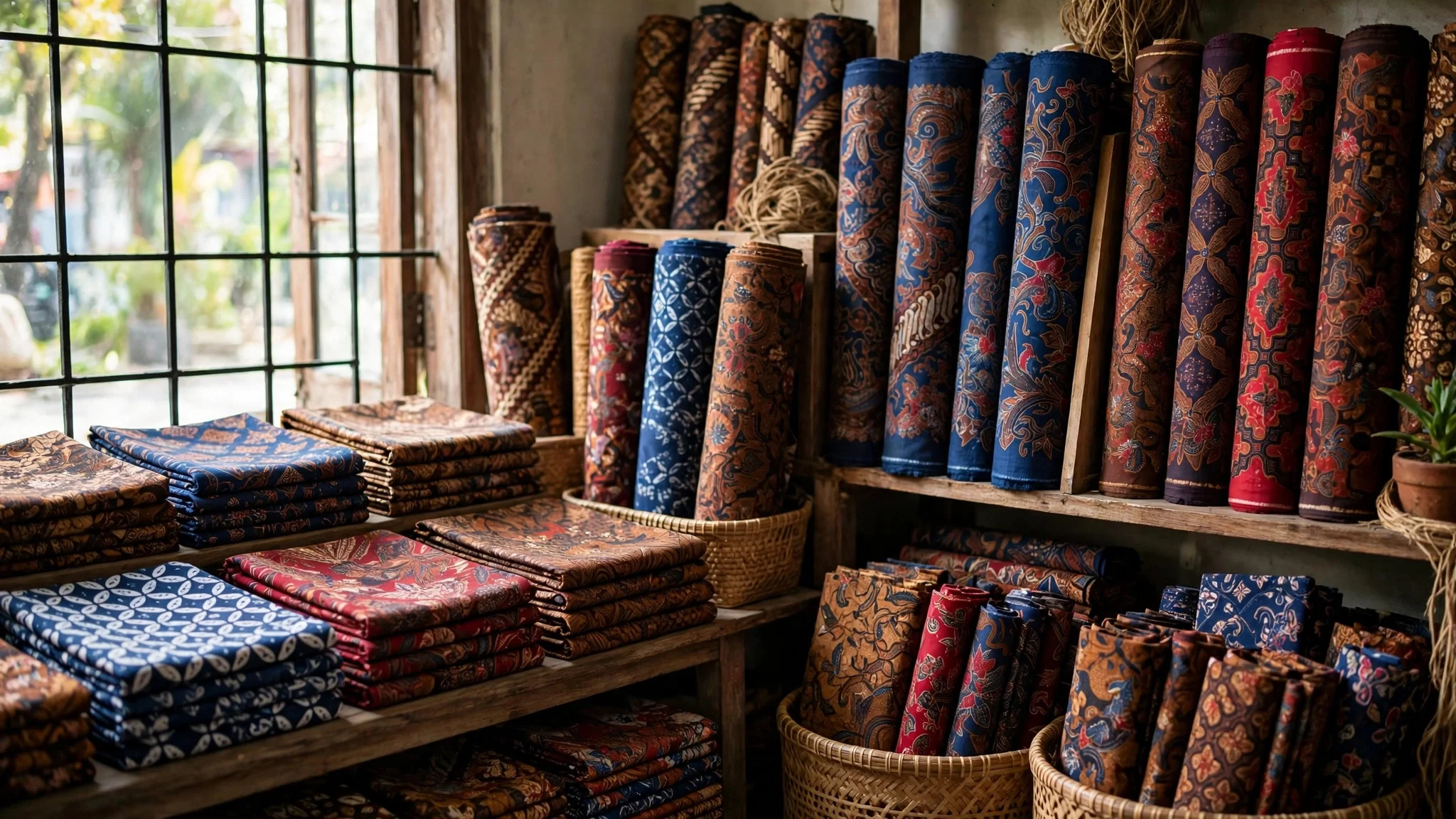
Batik is Indonesia's most famous textile, and Jakarta is one of the best places to buy it. From hand-drawn batik tulis to affordable printed batik cap, the city offers pieces for every budget, from a simple scarf for IDR 100,000 (roughly USD 6) to a hand-drawn silk cloth for IDR 5,000,000 (roughly USD 300) or more.
This guide explains where to shop for batik in Jakarta, how to tell hand-made cloth from printed copies, what prices to expect, and how to bargain politely. It also covers practical tips on sizing, care, and getting your purchases home safely.
What Batik Is and the Types You Will Find
Batik is cloth decorated with wax-resist dyeing, a craft recognised by UNESCO as part of Indonesia's cultural heritage. The three main types are batik tulis, drawn by hand with a small copper pen called a canting; batik cap, stamped with a copper block; and batik printing, made by machine in large runs.
Batik tulis takes weeks or months to finish, so it costs the most, usually from IDR 1,000,000 (roughly USD 60) for cotton and far more for silk. Batik cap is quicker to make and usually sells for IDR 300,000 to IDR 800,000 (roughly USD 18 to USD 48), while printed batik starts at around IDR 50,000 to IDR 150,000 (roughly USD 3 to USD 9).

Where to Buy Batik in Jakarta
Thamrin City and Tanah Abang are the biggest textile markets in Jakarta, with hundreds of stalls selling batik cloth, ready-made shirts, and dresses. Prices here are the lowest in the city, and bargaining is expected, so start at about half the asking price and meet somewhere in the middle.
For a calmer visit, try the batik shops in malls such as Grand Indonesia, Plaza Indonesia, and Senayan City, where fixed prices and air conditioning make shopping easier. Specialist boutiques in Kemang and Menteng sell high-end batik tulis and silk, often with the maker's story attached to each piece.
How to Spot Real Hand-Made Batik
Turn the cloth over: real batik tulis and batik cap show the pattern clearly on both sides, because the wax and dye soak through the fabric. Printed batik looks sharp on the front and pale or blank on the back, which is the easiest way to tell the difference.
Look for small irregularities in the lines, since hand-drawn wax work is never perfectly even, and ask the seller where the cloth was made. Batik from Pekalongan, Solo, and Yogyakarta is famous for its own colours and motifs, and a good seller will happily explain the origin of each piece.
Prices, Bargaining, and Paying
In markets, always ask the price before you commit, and bargain with a smile: offer about half, then raise your offer slowly until you agree. In malls and boutiques the price is fixed, but you can still ask about discounts, especially when you buy two or more pieces.
Most malls and larger shops accept cards and QRIS payments, while market stalls usually prefer cash in rupiah. Carry a mix of IDR 50,000 and IDR 100,000 notes, and keep small change ready, since many stalls cannot break a large note early in the morning.

Taking Batik Home and Practical Tips
Batik cloth folds flat and weighs very little, so it is easy to pack in a suitcase, but wrap silk pieces in tissue paper to protect them from snags. If you buy a large amount, ask the shop to pack it in a sealed bag, and keep your receipts in case customs asks about your purchases.
Your passport must be valid for at least six months when you enter Indonesia, so check the expiry date before you travel. If you need a phone or laptop during your trip, consider renting a device in Jakarta, since rental providers deliver to hotels and the airport, usually ask for a passport, and charge a daily rate that depends on the model.

Checklist Before You Book
Before you confirm a booking, double-check the number of units, the specifications, the rental period, and any delivery or collection fees. Make sure the written quote states what happens if a unit fails and how quickly a replacement arrives, so no surprise charge appears later and disrupts your budget.
Keep a copy of the quote, the handover note, and photos of the initial condition in one project folder. This record makes it easier for your finance team to check the invoice, speeds up any damage discussion, and gives you a tidy reference when you rent again for your next project.
Finally, name one person responsible for the whole rental period: the person who receives the units, checks their condition, and contacts the provider if anything goes wrong. One clear owner prevents confusion when teams change shifts, and ensures every unit returns in a properly recorded condition.
Ready to rent? Visit desasewaindonesia.com






