
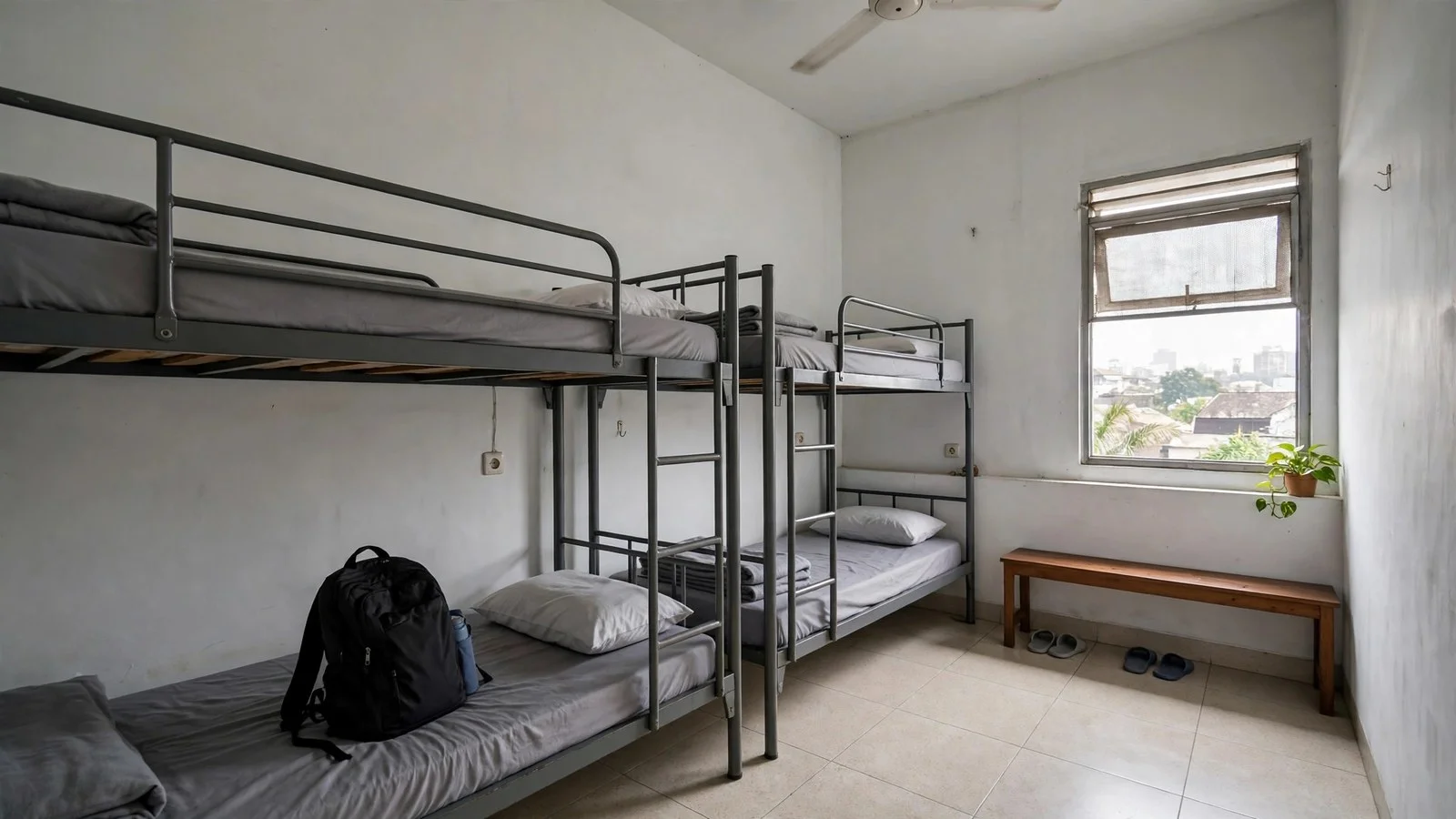
Jakarta is one of the cheapest big cities in Southeast Asia, and a backpacker can eat well, sleep comfortably, and get around all day for under USD 30, or around IDR 500,000. The trick is knowing where locals eat, which transport to use, and which neighbourhoods offer the best-value beds.
This guide breaks down a realistic daily budget, the best hostels and budget stays, the cheapest good food, and the transport that costs almost nothing, with prices in rupiah and approximate US dollars. Prices are approximate and can change, so treat them as a planning guide.
Daily Budget: What USD 30 Really Buys in Jakarta
A realistic backpacker day in Jakarta looks like this: a hostel dorm bed from around IDR 150,000 to IDR 250,000 (roughly USD 9 to USD 15), three meals for around IDR 60,000 to IDR 120,000 (roughly USD 4 to USD 7), and transport for around IDR 20,000 to IDR 50,000 (roughly USD 1 to USD 3). That leaves room for a coffee, a snack, and a museum ticket.
The biggest budget risk is ride-hailing in heavy traffic, where fares climb and waiting times stretch, so use the MRT and buses for longer trips. Keep small cash notes ready, because many food stalls and buses do not accept cards.

Where to Sleep: Hostels and Budget Stays
Hostel dorms in Central and South Jakarta usually cost from around IDR 120,000 to IDR 250,000 per night (roughly USD 7 to USD 15), often including breakfast, Wi-Fi, and a locker. Female-only dorms are common, and many hostels have a shared kitchen and a rooftop area where travellers swap tips and plan day trips together.
Budget guesthouses with a private room and a fan or air conditioning start from around IDR 200,000 to IDR 400,000 per night (roughly USD 12 to USD 24). Book the first two nights in advance, then extend in person if you like the place, because walk-in rates are often lower than the online price.
Eating Well for Less: Street Food and Local Eateries
Jakarta's street food is the backpacker's best friend: a plate of nasi goreng, mie ayam, or gado-gado from a street stall usually costs from around IDR 15,000 to IDR 30,000 (roughly USD 1 to USD 2). Eat where the queue is longest and the food is cooked in front of you, and stick to bottled water and hot drinks.
Small local eateries called warteg serve rice with a choice of side dishes for from around IDR 10,000 to IDR 25,000 (roughly USD 1 to USD 2), and they are open early and late. For a treat, a cafe lunch in Kemang or Senopati costs from around IDR 50,000 to IDR 100,000 (roughly USD 3 to USD 6).
Getting Around on a Backpacker Budget
The MRT and TransJakarta buses are the cheapest way to cross the city, with fares from around IDR 3,500 to IDR 14,000 (less than USD 1). Buy a travel card at a station for around IDR 30,000 to IDR 50,000 (roughly USD 2 to USD 3), including a small balance, and top it up at convenience stores.
Ride-hailing motorbike taxis are cheap for short trips, usually from around IDR 10,000 to IDR 30,000 (less than USD 2), but traffic can be slow at rush hour. Walking is free and often faster than a car in the centre, so plan your day around one neighbourhood at a time.

Free and Cheap Things to Do in Jakarta
Many of Jakarta's best experiences cost nothing: walking around Kota Tua's old town square, watching the sunset at Ancol beach, and browsing the markets of Menteng and Blok M. Museum tickets are usually cheap, from around IDR 5,000 to IDR 20,000 (less than USD 2), and several city parks and mosques are free to visit.
If you want good photos without buying a camera, rental providers in Jakarta deliver cameras to hotels and hostels, usually ask for a passport, and charge a daily rate. A rented camera for one day can cover a whole trip's photos for far less than the cost of buying one.

Checklist Before You Book
Before you confirm a booking, double-check the number of units, the specifications, the rental period, and any delivery or collection fees. Make sure the written quote states what happens if a unit fails and how quickly a replacement arrives, so no surprise charge appears later and disrupts your budget.
Keep a copy of the quote, the handover note, and photos of the initial condition in one project folder. This record makes it easier for your finance team to check the invoice, speeds up any damage discussion, and gives you a tidy reference when you rent again for your next project.
Finally, name one person responsible for the whole rental period: the person who receives the units, checks their condition, and contacts the provider if anything goes wrong. One clear owner prevents confusion when teams change shifts, and ensures every unit returns in a properly recorded condition.
Ready to rent? Visit desasewaindonesia.com






