
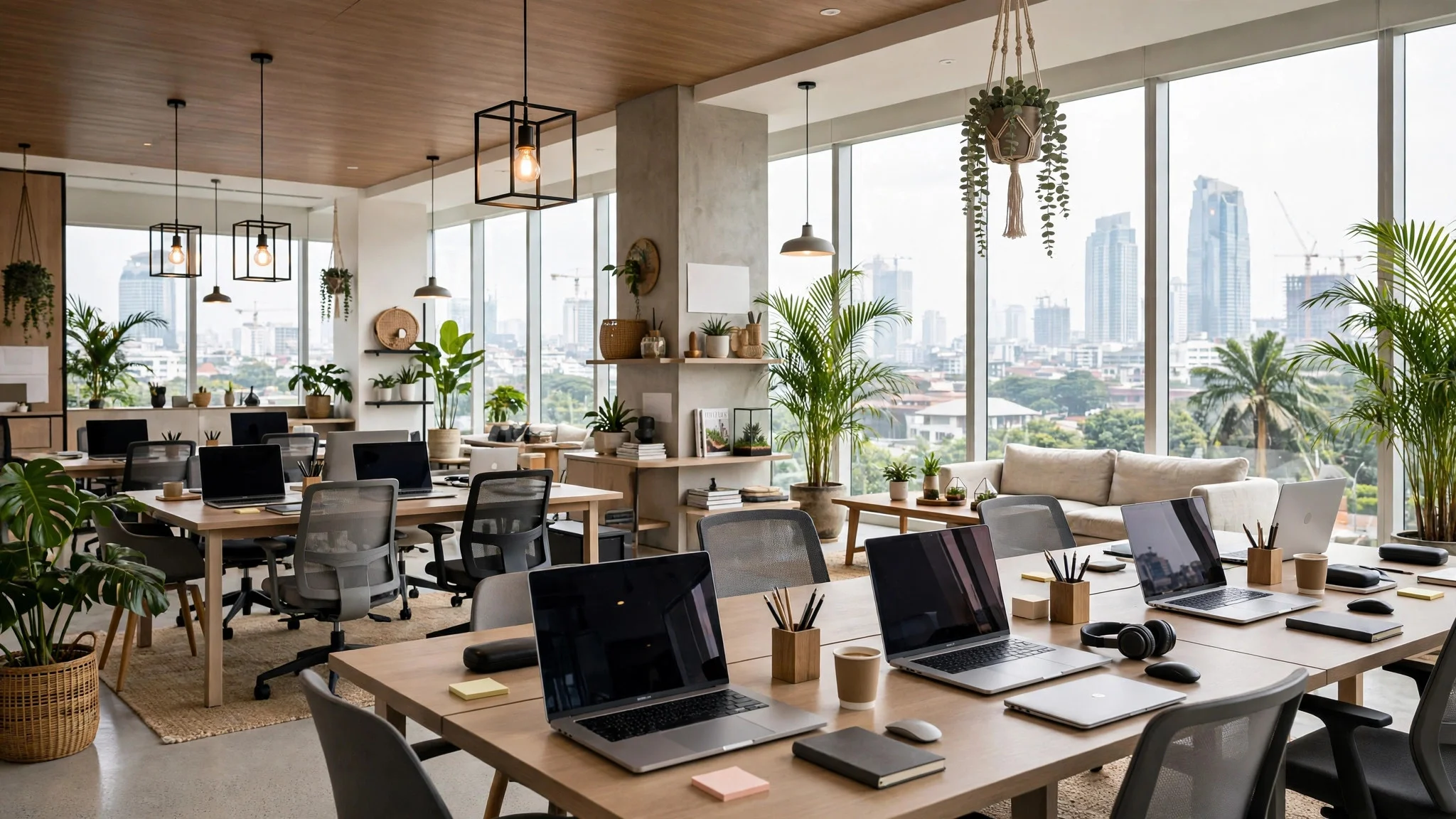
Jakarta Coworking Spaces Guide for Digital Nomads and Business Travelers
Jakarta is one of Southeast Asia's busiest business hubs, and it has quietly become a practical base for digital nomads, remote workers, and business travelers passing through Indonesia. If you need a reliable desk, fast internet, and a quiet place to work, the city's coworking spaces beat a hotel room or a noisy cafe. This guide covers the best areas, what to expect, typical prices, and how renting a laptop or connectivity gear can smooth your work trip.
Best Coworking Areas in Jakarta
Most coworking spaces cluster in Jakarta's central and southern business districts. Sudirman and Kuningan are the heart of the corporate zone, packed with office towers, embassies, and five-star hotels. Spaces here suit business travelers who want to be close to clients and meeting venues. Kemang, in South Jakarta, has a more relaxed, creative atmosphere with cafes and smaller studios, and it appeals to longer-stay nomads. Meanwhile, the SCBD area combines modern towers with malls and restaurants, making it easy to work, eat, and meet in one place.
When choosing an area, think about your daily commute. Jakarta traffic can be heavy during morning and evening rush hours, so staying near your coworking space saves hours each week. If your meetings are in Central Jakarta, base yourself nearby rather than across town. Many spaces offer day passes, so try two or three locations in your first week before committing monthly.

What to Expect Inside a Coworking Space
A typical Jakarta coworking space offers hot desks, dedicated desks, private offices, and meeting rooms you can book by the hour. Expect air conditioning, high-speed WiFi, printers, phone booths for private calls, and a pantry with coffee and drinking water. Many spaces also run community events, networking lunches, and workshops, which are a useful way to meet local founders and fellow travelers.
Most spaces operate from around 8 or 9 in the morning until late evening, and some offer 24-hour access for monthly members. Day passes usually include WiFi and a desk; meeting rooms and printing are often charged separately. Bring your own laptop and charger, and carry a universal adapter, as Indonesian outlets use two-pin plugs.
How Much Do Coworking Spaces Cost?
Prices vary by location and facilities. A day pass typically starts from around IDR 100,000 to IDR 250,000 (around USD 6 to USD 15). A monthly hot-desk membership usually starts from around IDR 1,500,000 to IDR 3,500,000 per month (around USD 90 to USD 210), while a dedicated desk or private office costs more. Meeting rooms generally start from around IDR 150,000 to IDR 400,000 per hour (around USD 9 to USD 25), depending on size and location.
These ranges are a starting point, not a fixed quote. Premium spaces in Sudirman and SCBD sit at the higher end, while smaller spaces in Kemang and outer districts are often cheaper. Always confirm what is included before paying, especially meeting-room hours, printing credits, and access times.

Laptop and WiFi Rental for Travelers
Not every traveler wants to carry expensive gear through airports, and some arrive with a laptop that needs repair or an upgrade for a presentation. Renting a laptop in Jakarta is a practical alternative. Rental providers can deliver a ready-to-use laptop to your hotel or coworking space, which is especially helpful if you arrive late or have a tight meeting schedule. If you are staying longer, a weekly or monthly rental is usually more economical than a daily rate.
Connectivity matters just as much as hardware. A pocket WiFi device or a local SIM card gives you internet on the go, from airport transfers to client visits. For foreign renters, providers generally ask for a passport as identification, and some may ask for your hotel address and a refundable deposit. Confirm the rental period, delivery and pickup arrangements, and what happens if a device is damaged, before you confirm the booking.
Practical Tips for Foreigners
Carry your passport or a clear copy of it whenever you sign up for a coworking membership or a rental, as venues and providers commonly ask for identification. Dress codes are usually smart casual in business districts, and it is polite to keep phone calls in booths or outside shared desk areas.
Plan your transport in advance. Ride-hailing apps work well across Jakarta, and the MRT and TransJakarta bus lines are affordable options along the main corridors. Avoid scheduling back-to-back meetings across distant districts, and leave extra time for traffic. With a good base, reliable gear, and a realistic schedule, Jakarta can be a comfortable and productive place to work.
Ready to rent? Visit desasewaindonesia.com






