
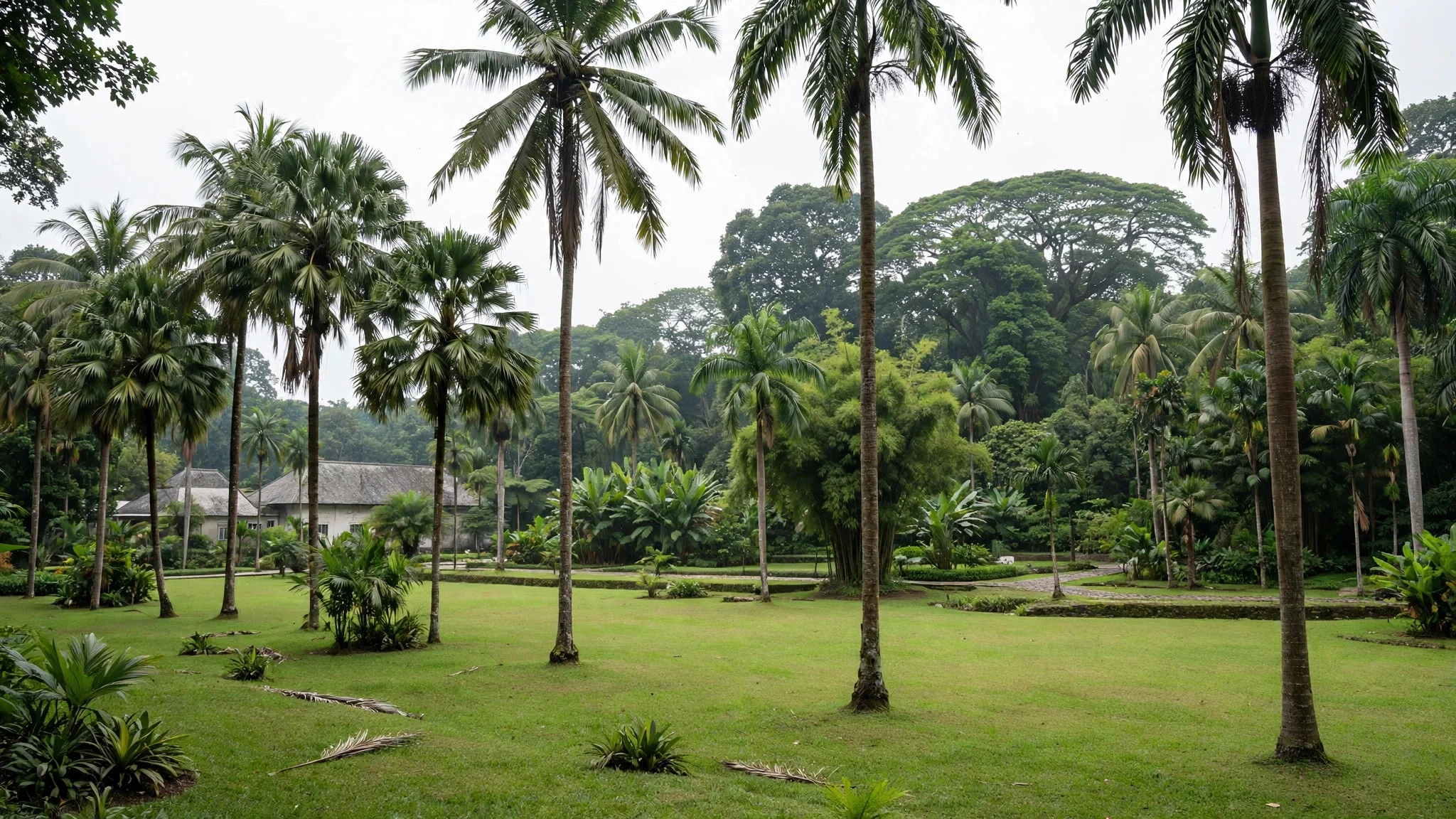
Bogor sits about 60 kilometres south of Jakarta, and it feels like a different world: cooler air, green hills, and one of Asia's oldest botanical gardens. It is the easiest day trip from the capital, and most visitors come for the gardens, the mountain views, and a break from Jakarta's traffic.
This guide covers how to get there by train or road, what to see at Kebun Raya Bogor and the Puncak tea gardens, and what a day trip really costs in rupiah and approximate US dollars. Leave early, and you can be back in Jakarta in time for dinner.
Getting There: Trains and Road Options
The simplest way is the KRL Commuterline train from stations such as Manggarai or Jakarta Kota to Bogor station, a ride of around 60 to 90 minutes that costs from around IDR 6,000 to IDR 8,000 (less than USD 1). Trains run frequently from early morning, but they are crowded at rush hour.
By road, a car or ride-hailing trip takes around one to two hours depending on traffic, and a car with a driver for the day usually costs from around IDR 500,000 to IDR 800,000 (roughly USD 30 to USD 48). The toll road is the fastest route, and toll fees are usually paid on top of the hire price.

Kebun Raya Bogor: The Botanical Gardens
Kebun Raya Bogor, founded in 1817, covers around 87 hectares in the centre of the city and holds thousands of plant species, including giant rain trees, palms, and orchids. Entrance usually costs from around IDR 25,000 to IDR 50,000 (roughly USD 2 to USD 3) for foreign visitors.
Allow at least two to three hours to walk the main paths, see the giant lily pond, and rest under the rain trees. The gardens open early in the morning, and arriving before 9 am means cooler air, softer light for photos, and far fewer visitors.
Puncak Tea Gardens and Mountain Air
From Bogor, the road climbs to Puncak, a mountain pass lined with tea gardens, strawberry farms, and viewpoints over green valleys. The air is several degrees cooler than Jakarta, so bring a light jacket even on a sunny day.
Tea garden stops usually charge a small entrance fee, from around IDR 10,000 to IDR 30,000 (roughly USD 1 to USD 2), and many have cafes with views over the rows of tea bushes. Weekends bring heavy traffic on the Puncak road, so a weekday trip is much more relaxed.
Costs: A Realistic Day Trip Budget
A budget day trip by train, garden entrance, and simple local food can cost from around IDR 200,000 to IDR 350,000 per person (roughly USD 12 to USD 21), not counting shopping. Add a private car for the day and a cafe lunch, and the total rises to around IDR 600,000 to IDR 900,000 (roughly USD 36 to USD 54).
Carry cash in small notes, because garden stalls, parking, and small eateries often do not take cards. Keep your main cash and cards in a front pocket or a money belt, and set aside your return train fare so you are never stuck without it.

Practical Tips: Timing, Passport, and Rental Gear
Your passport must be valid for at least six months when you enter Indonesia, and carry a copy on your phone: hotels and rental providers often ask for it. Leave Jakarta by 6 or 7 in the morning to beat the traffic and reach the gardens as they open.
Wear comfortable walking shoes, bring water and a rain jacket, and plan to leave Bogor by mid-afternoon so you are back before the evening rush. If you want good photos, rental providers in Jakarta deliver cameras to hotels, usually ask for a passport, and charge a daily rate.

Checklist Before You Book
Before you confirm a booking, double-check the number of units, the specifications, the rental period, and any delivery or collection fees. Make sure the written quote states what happens if a unit fails and how quickly a replacement arrives, so no surprise charge appears later and disrupts your budget.
Keep a copy of the quote, the handover note, and photos of the initial condition in one project folder. This record makes it easier for your finance team to check the invoice, speeds up any damage discussion, and gives you a tidy reference when you rent again for your next project.
Finally, name one person responsible for the whole rental period: the person who receives the units, checks their condition, and contacts the provider if anything goes wrong. One clear owner prevents confusion when teams change shifts, and ensures every unit returns in a properly recorded condition.
Ready to rent? Visit desasewaindonesia.com






