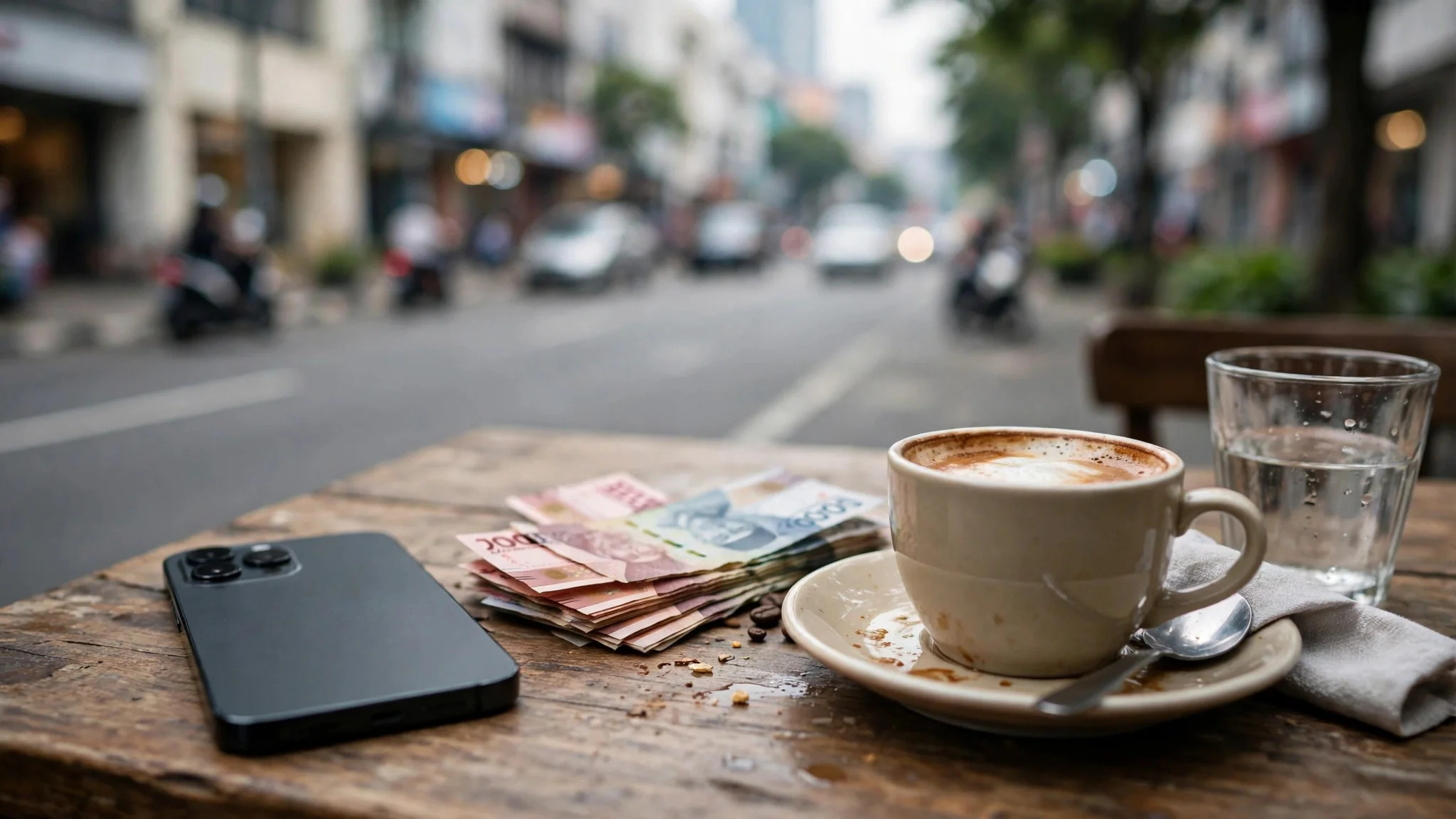
Jakarta runs on cashless payments, and QRIS is the system that ties them together. One QR code, printed at almost every shop, cafe, and market stall, accepts payments from Indonesian e-wallets and banking apps, so most daily spending needs no cash at all.
This guide explains how QRIS works, which e-wallets tourists can actually use, where cash is still needed, and how to pay safely. Prices are in IDR with approximate USD equivalents, so you can judge what each payment method really costs.
What QRIS Is and How It Works
QRIS, short for Quick Response Code Indonesian Standard, is a single QR code standard set by Bank Indonesia. Instead of a different code for every wallet, a shop shows one QRIS code, and you scan it with any participating app to pay.
To pay, open your wallet or banking app, tap the scan or pay button, point your camera at the code, enter the amount if it is not already shown, and confirm with your PIN. The payment is instant, and both you and the seller get a confirmation on screen within seconds.

E-Wallets Tourists Can Use
The most common Indonesian e-wallets are GoPay, OVO, and DANA, and most ride-hailing, food delivery, and shopping apps accept all three. Foreign visitors can usually register with a passport and an Indonesian SIM card, though some features, such as topping up from a foreign card, may be limited.
If you cannot register a local wallet, ask your hotel or a local friend to help, or use an international card where it is accepted. Many malls, hotels, and larger restaurants take Visa and Mastercard, and some accept Apple Pay or Google Pay, but small shops and street stalls almost always need QRIS or cash.
Topping Up, Limits, and Fees
Top up a local wallet at a convenience store such as Indomaret or Alfamart, at an ATM, or by bank transfer, usually in amounts from IDR 10,000 (roughly USD 0.60) upwards. Topping up at a store is free or costs a small fee of around IDR 1,000 to IDR 2,500 (roughly USD 0.06 to USD 0.15).
Unverified wallets have a balance limit of around IDR 2,000,000 (roughly USD 120) and a monthly transaction limit, while verified accounts can hold up to IDR 20,000,000 (roughly USD 1,200). Keep your balance modest and top up little and often, so a lost phone never costs you a large sum.
Where Cash Is Still King
Cash is still needed at traditional markets, small street food stalls, parking attendants, and some taxi drivers, especially outside the city centre. Carry IDR 50,000 and IDR 100,000 notes, plus smaller notes and coins for snacks, drinks, and tips.
Withdraw rupiah from ATMs at banks and malls, which usually charge a fee of around IDR 20,000 to IDR 30,000 per withdrawal (roughly USD 1.20 to USD 1.80) for foreign cards. Withdraw larger amounts less often to save on fees, and use ATMs inside banks or malls rather than standalone machines at night.

Staying Safe and Connected While You Pay
Never share your wallet PIN or one-time password with anyone, and check the merchant name and amount on screen before you confirm a payment. If a QR code looks covered with a sticker or looks different from the shop's usual code, ask the staff before you scan it.
A local SIM card with a data package, from around IDR 100,000 per month (roughly USD 6), keeps your payment apps working everywhere in the city. If you need a spare phone for payments and maps, consider renting a smartphone in Jakarta, since rental providers deliver to hotels and the airport, usually ask for a passport, and charge a daily rate that depends on the model.

Checklist Before You Book
Before you confirm a booking, double-check the number of units, the specifications, the rental period, and any delivery or collection fees. Make sure the written quote states what happens if a unit fails and how quickly a replacement arrives, so no surprise charge appears later and disrupts your budget.
Keep a copy of the quote, the handover note, and photos of the initial condition in one project folder. This record makes it easier for your finance team to check the invoice, speeds up any damage discussion, and gives you a tidy reference when you rent again for your next project.
Finally, name one person responsible for the whole rental period: the person who receives the units, checks their condition, and contacts the provider if anything goes wrong. One clear owner prevents confusion when teams change shifts, and ensures every unit returns in a properly recorded condition.
Ready to rent? Visit desasewaindonesia.com