
Jakarta Emergency Guide for Tourists: Hospitals, Police, Embassies & Useful Numbers
Emergencies are the last thing you want to think about on holiday, but a little preparation goes a long way in a megacity of over ten million people. Jakarta is generally safe for visitors, yet traffic accidents, sudden illness, lost passports, and stomach trouble are all real possibilities. Save this guide before you fly: the right number and the right hospital can turn a crisis into a manageable detour.
Save These Numbers First
Indonesia has a single national emergency number: 112. It works from any phone and connects you to the nearest command center for police, ambulance, or fire. Operators may answer in Indonesian first — stay calm, say "Tolong! Saya butuh bantuan" ("Help! I need assistance"), and give your location with a landmark, such as "near Istiqlal Mosque". Two more numbers worth saving: 110 for the police and 118 for ambulance services. Indonesia's country code is +62; dial it before embassy numbers stored from your home country. Test that you can make calls on day one if you buy a local SIM — many tourist eSIMs are data-only.

An ambulance on a city street in Indonesia — photo: Pexels
International-Standard Hospitals in Jakarta
For anything beyond a mild fever, head to a private international hospital where doctors speak English and billing works with travel insurance. Siloam Hospitals Simatupang and Mayapada Hospital (Lebak Bulus and Kuningan branches) are the best-known choices for foreigners, with 24-hour emergency departments and international patient desks. Pondok Indah Hospital Group (PIK and Pondok Indah branches) is another strong option in the south of the city. Bring your passport and insurance card to the ER — hospitals often ask for an upfront deposit or a cashless guarantee from your insurer. Consultation at an ER or specialist clinic typically starts from around Rp500,000 to Rp1,500,000 (about $31–$94) before tests, while basic treatment for stomach trouble or minor infections at a clinic often costs from around Rp300,000 (about $19). For complex cases, note that Thailand's Bumrungrad International Hospital maintains a referral office in Jakarta for second opinions and transfers to Bangkok.
Embassies in Jakarta: Your Safety Net Abroad
Jakarta hosts embassies from nearly every country, clustered mainly in Central and South Jakarta. If your passport is lost or stolen, head to your embassy's consular section — they can issue an emergency travel document and guide you to the nearest police station for the report (laporan polisi) that your insurer and airline will need. Important realistic expectations: embassies cannot pay your hospital bills, act as your lawyer, or pull you out of police custody — but they can contact your family, provide lists of trusted local doctors and attorneys, and monitor your case. Save your embassy's address and emergency phone in your phone before departure, not when you need it. Embassy offices close on weekends and public holidays, though most run a 24-hour emergency line for genuine crises involving their citizens.

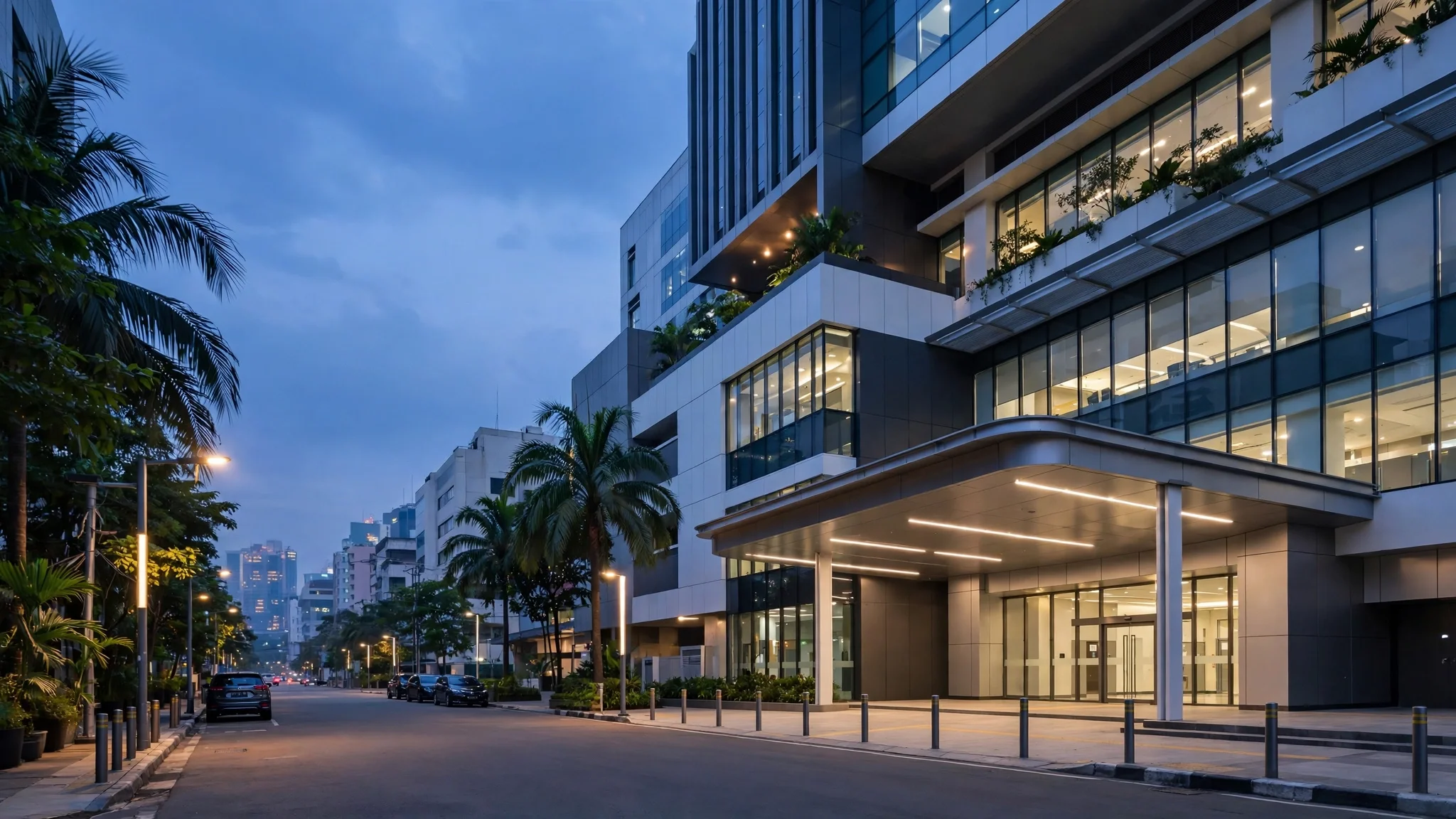
A modern hospital building with a glass facade — photo: Pexels
24-Hour Pharmacies and Travel Insurance Tips
Minor complaints — headaches, allergies, stomach upset — are usually handled at the pharmacy. Look for apotek 24 jam (24-hour pharmacy) signs; chains like Kimia Farma, Century, and Watsons have branches that open around the clock, especially in malls and near hospitals. Pharmacists in tourist areas generally speak enough English to help, but bring a screenshot of your medication's generic name and dosage, since brand names differ by country. As for insurance: buy travel insurance that explicitly covers medical evacuation and adventure activities if you plan trips outside Java. Keep digital copies of your policy and your passport in cloud storage, photograph every medical receipt, and check whether your insurer requires pre-approval for hospital admission — a five-minute call can mean the difference between cashless billing and paying upfront.
Stay Reachable in an Emergency
The single most useful "safety device" in Jakarta is a working local connection. A pocket WiFi device (from around Rp50,000–Rp80,000 or $3–$5 per day) keeps your maps, translation app, and messaging running all day, while a rented smartphone works even if your own phone cannot take an Indonesian SIM. Share your live location with a travel companion or family member when heading out at night, and keep your hotel's business card in your pocket. Foreign renters typically need only a passport as ID, and rental providers can deliver devices straight to your hotel or meet you at Soekarno-Hatta Airport on arrival.
Ready to rent? Visit desasewaindonesia.com
Travel with a safety net: rent a pocket WiFi or a smartphone so you can always reach help, share your location, and pull up this emergency guide when it matters. Ready to rent? Visit desasewaindonesia.com for tourist-friendly rentals delivered to your hotel or the airport.






