
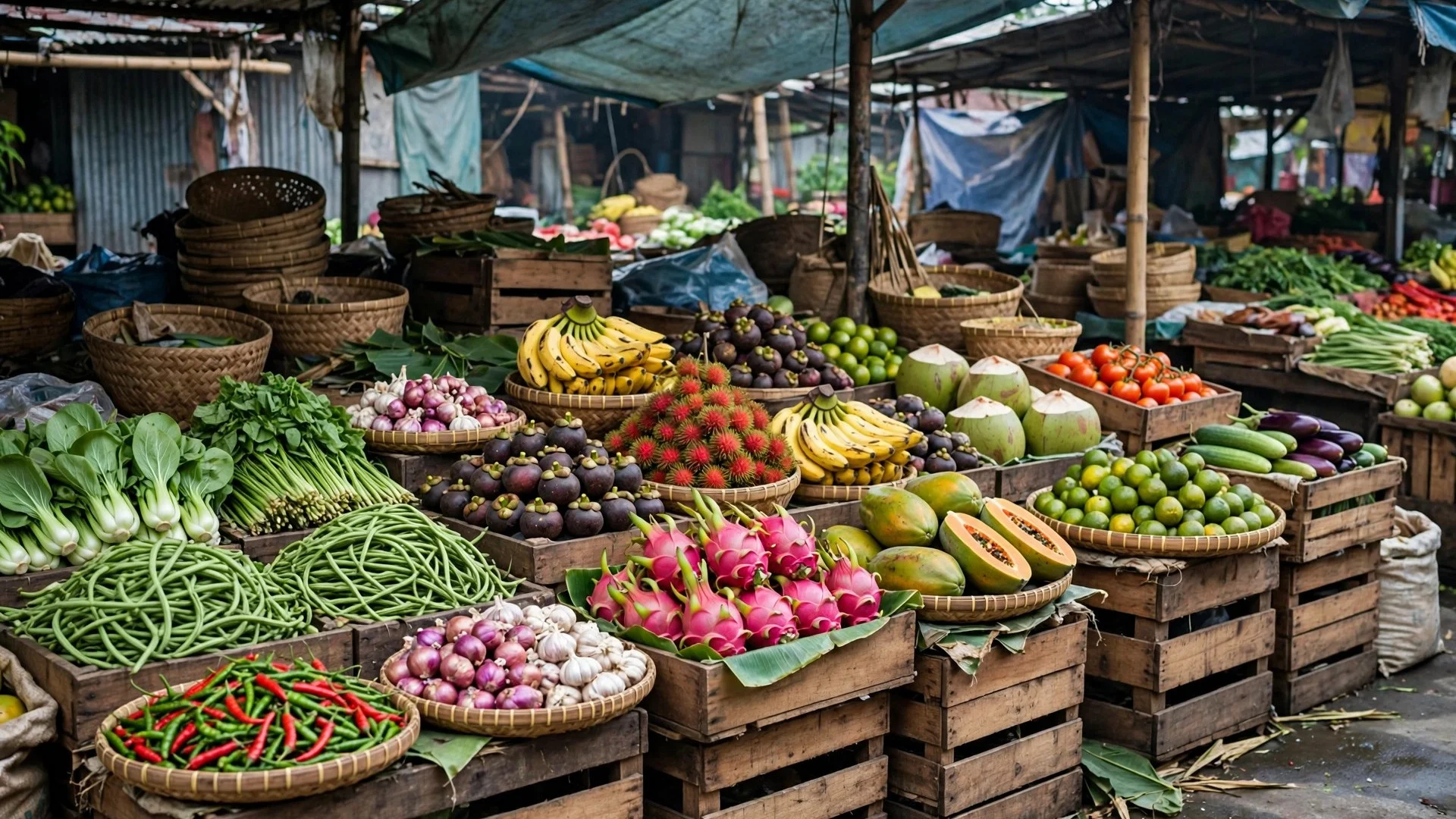
Cooking for yourself in Jakarta is easier than most visitors expect. The city has modern supermarkets with imported goods, lively traditional markets where a week's fruit costs less than a single restaurant meal, and delivery apps that bring groceries to your hotel or apartment in under an hour.
This guide explains where to shop, what things cost, and how to handle payment, storage, and halal choices. Prices are in IDR with approximate USD equivalents, and practical tips cover the gear and connectivity you may need during a longer stay.
Supermarkets: Where to Go and What to Expect
Large supermarkets such as Grand Lucky, Ranch Market, and Farmers Market, plus the food halls inside big malls, stock everything from local rice and spices to imported cheese and breakfast cereal. They open from around 8 am to 10 pm, and most have a bakery, a deli counter, and ready meals for busy evenings.
A basic daily basket of bread, eggs, fruit, and drinks costs around IDR 50,000 to IDR 100,000 (roughly USD 3 to USD 6), and two or three times more for imported items. Bring your own bag or buy a reusable one at the till, and keep the receipt: some hotels ask for it if you use a shared fridge.

Traditional Markets: Prices and Bargaining
Traditional markets, called pasar, are where most Jakartans buy fresh food, and they are worth a visit even if you only buy fruit. At Pasar Mayestik, Pasar Santa, or the morning market near your hotel, a kilo of mangoes costs around IDR 20,000 to IDR 40,000 (roughly USD 1.20 to USD 2.40), and bananas around IDR 15,000 a bunch (less than USD 1).
Prices at a pasar are usually negotiable, but the starting price is already low, so bargain gently and with a smile. Go early in the morning for the freshest produce, carry small notes, and watch your bag in the crowds. Vendors often give a small extra to a friendly first-time buyer.
Halal Food, Imported Goods, and Special Diets
Most food sold in Jakarta is halal, and supermarkets label halal products clearly. Pork and alcohol sit in separate sections or dedicated stores, and imported pork is usually found only in larger supermarkets in expat areas such as Kemang and Kelapa Gading.
If you follow a vegetarian, vegan, or gluten-free diet, larger supermarkets stock tofu, tempeh, plant milk, and imported gluten-free products, though the choice is smaller than in Europe or North America. Traditional markets are excellent for fresh vegetables, tofu, and tempeh, which cost very little.
Delivery Apps and Carrying Groceries Home
If you stay in an apartment or serviced residence with a kitchen, grocery delivery saves a trip in the heat. Apps such as GoMart and GrabMart, plus the delivery services of large supermarkets, bring orders to your door in 30 to 60 minutes, with a delivery fee of around IDR 10,000 to IDR 20,000 (roughly USD 0.60 to USD 1.20) and a minimum order of about IDR 50,000.
Most hotels and apartments accept deliveries at reception, but check the policy first, since some charge a small handling fee. If you buy fresh fish or meat, ask the vendor to pack it in ice, and refrigerate it as soon as you arrive. For a longer stay, a weekly shop beats eating out for every meal.

Practical Tips: Payments, Storage, and Gear
Your passport must be valid for at least six months when you enter Indonesia, and keep a copy on your phone when shopping, since some supermarkets ask for ID for larger card payments. Supermarkets accept cards and QRIS mobile payments, while traditional markets are cash only, so carry small notes.
A local SIM card with a data package, from around IDR 100,000 per month (roughly USD 6), lets you order delivery and check prices on the go. If you stay for weeks and need a small fridge, a rice cooker, or extra kitchen gear, consider renting equipment in Jakarta: rental providers deliver to hotels and apartments, usually ask for a passport, and charge a daily rate.

Checklist Before You Book
Before you confirm a booking, double-check the number of units, the specifications, the rental period, and any delivery or collection fees. Make sure the written quote states what happens if a unit fails and how quickly a replacement arrives, so no surprise charge appears later and disrupts your budget.
Keep a copy of the quote, the handover note, and photos of the initial condition in one project folder. This record makes it easier for your finance team to check the invoice, speeds up any damage discussion, and gives you a tidy reference when you rent again for your next project.
Finally, name one person responsible for the whole rental period: the person who receives the units, checks their condition, and contacts the provider if anything goes wrong. One clear owner prevents confusion when teams change shifts, and ensures every unit returns in a properly recorded condition.
Ready to rent? Visit desasewaindonesia.com






