
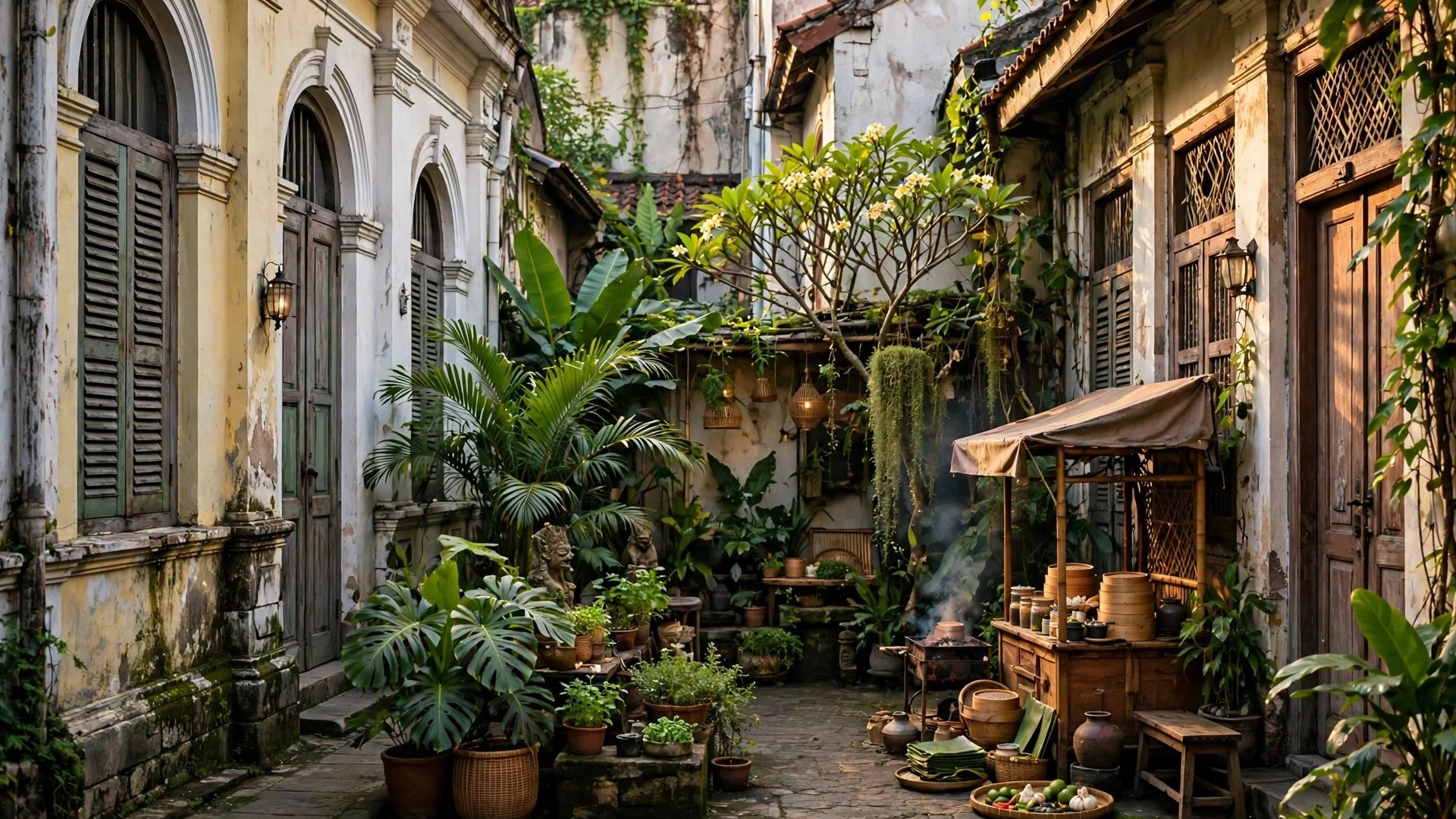
Most visitors to Jakarta see the same few landmarks: the National Monument, the old town square, and the big malls. Beyond those, the city hides quiet courtyards, green corners, and neighbourhood markets that most tourists never find — and these are often the places locals love most.
This guide points you to a few of those hidden gems, explains how to reach them by public transport or ride-hailing, what they cost, and how to visit them respectfully. All prices are given as ranges in rupiah and dollars, and all of these spots are free or cheap to enter.
Kota Tua's Quiet Lanes Beyond the Main Square
Fatahillah Square is the postcard view of old Jakarta, but the quiet lanes behind it are more rewarding. Walk past the square towards Kali Besar, the old canal, and you will find Dutch-era warehouses, small art studios, and cafes tucked into restored shop houses. Further along, the old harbour area of Sunda Kelapa still loads wooden pinisi ships by hand, a working scene that feels a world away from the city centre.
Entry to the square and the lanes is free; the small museums nearby charge around IDR 5,000 to IDR 15,000 (roughly USD 0.30 to USD 1). Visit in the early morning to avoid the heat and the crowds, and bring water — shade is hard to find on the square itself.

Hidden Gardens and Green Corners in the City
Jakarta is not famous for its parks, but it has a few green escapes. Taman Suropati in Menteng is a small, leafy park where locals walk, read, and practise tai chi in the morning. Tebet Eco Park in South Jakarta has boardwalks over ponds and shaded paths, and entry is free.
For a bigger escape, the mangrove forest at Pantai Indah Kapuk in North Jakarta offers wooden walkways through the trees, with entry around IDR 25,000 to IDR 30,000 (roughly USD 1.50 to USD 2). Bring water, a hat, and insect repellent, and go early or late in the day when the light is softer and the air cooler.
Neighbourhood Markets Locals Actually Shop At
Skip the tourist souvenir shops and visit a neighbourhood market instead. Pasar Santa in South Jakarta is a small market where young local vendors sell coffee, plants, and handmade goods alongside traditional stalls. Pasar Baru in Central Jakarta is one of the city's oldest shopping streets, with fabric shops, tailors, and snack sellers.
Prices are lower than in malls, and polite bargaining is normal — start at around half the asking price and meet in the middle with a smile. Bring small cash notes, keep your bag in front of you in crowds, and try the snacks: market food is often the best in the city.

Secret Viewpoints and Riverside Walks
For a different view of the city, head to the riverside walk along the Ciliwung in the old town, or to the waterfront at Ancol at sunset, where locals gather to watch the sky change over Jakarta Bay. Entry to the Ancol beach area costs around IDR 25,000 to IDR 35,000 (roughly USD 1.50 to USD 2).
Another quiet option is the rooftop of a hotel cafe in Menteng or Kemang at golden hour, where a coffee costs IDR 30,000 to IDR 60,000 (roughly USD 2 to USD 4) and the view comes free. These spots are best at sunrise or sunset, when the light is at its most dramatic — a camera rented and delivered to your hotel is handy if you want proper photos and travel light.
Getting Around, Staying Safe, and What to Pack
The MRT, TransJakarta buses, and ride-hailing apps make hidden spots easy to reach: most rides within the city cost IDR 10,000 to IDR 50,000 (roughly USD 0.60 to USD 3). Download an offline map before you set out, because mobile signal can be patchy in old buildings.
Keep a photocopy of your passport on your phone and the original in your hotel safe, carry bottled water, and dress for heat and sudden rain — a light rain jacket weighs almost nothing. Respect the neighbourhoods you visit: ask before photographing people, keep your voice down in residential lanes, and leave no rubbish behind.

Ready to rent? Visit desasewaindonesia.com






