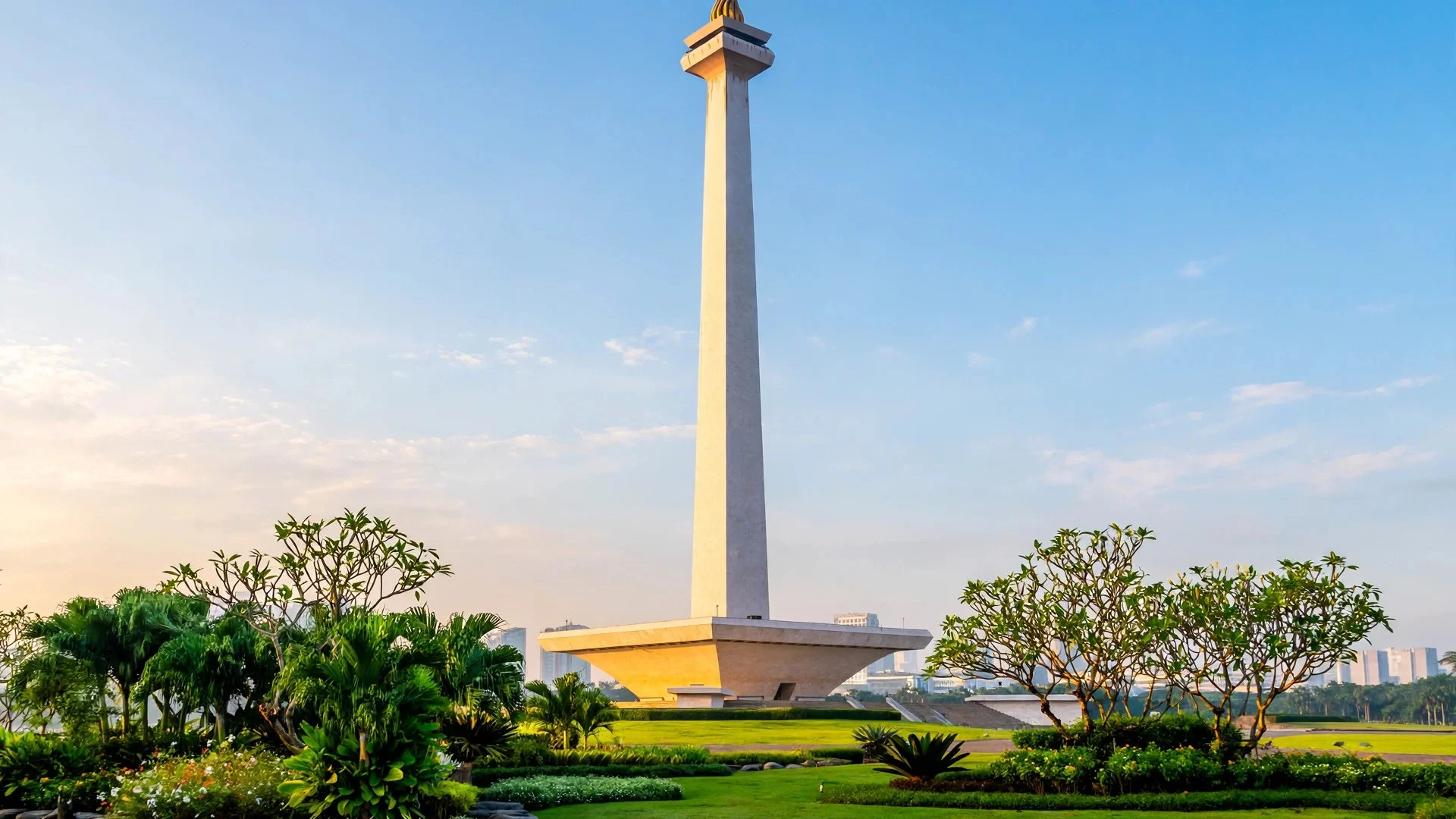
Merdeka Square is the largest open square in Jakarta, and the National Monument, known as Monas, rises from its centre as the symbol of Indonesian independence. The square is a good first stop for any visitor, since it combines the monument, a museum, gardens, and views of the city's most important government buildings.
This guide explains how to visit Monas, what the observation deck and the museum cost in IDR and USD, and how to plan your morning around the square. It also covers practical details such as opening hours, security checks, and getting there by public transport or ride-hailing.
Merdeka Square: The Heart of Jakarta
Merdeka Square covers a large green area in Central Jakarta, and it is open to the public as a park where families walk, jog, and picnic in the late afternoon. The square is flanked by the Presidential Palace, government offices, and the National Museum, so a walk around its edges gives a quick sense of the city's centre.
The best time to visit is early morning, when the air is cooler and local residents exercise on the paths, or late afternoon, when the light turns golden and the crowds gather. Bring water and a hat, since shade is limited on the open lawns, and wear comfortable shoes for the walk across the square.

Going Up the Monas Observation Deck
A lift inside the monument carries visitors to an observation deck near the top, 115 metres above the square, with views across Central Jakarta. On a clear morning you can see the old town to the north, the skyscrapers of the business district to the south, and the mountains on the horizon.
Tickets for the observation deck are sold at the monument and usually cost around IDR 15,000 to IDR 20,000 per person (roughly USD 1), with a separate ticket for the museum below. Queues are longest on weekends and public holidays, so arrive early and expect a security check before you enter.
The National History Museum Inside Monas
Inside the base of the monument, the National History Museum displays dioramas that tell the story of Indonesia from ancient kingdoms to independence in 1945. Each scene is labelled in Indonesian and English, and the exhibition is a good introduction for visitors who know little about the country's history.
Allow around 45 minutes for the museum, and look for the Hall of Independence, where the original text of the Proclamation of Independence is displayed. Photography is usually allowed in the museum, but check the signs in each room, since some displays restrict flash.
Tickets, Opening Hours, and Getting There
Monas is usually open from 8 a.m. to 4 p.m., with the observation deck closing earlier when the daily quota is reached. The square itself is open from early morning, and entry to the square is free, with tickets only needed for the monument and the museum.
Reach the square by the TransJakarta busway, which stops nearby, or by ride-hailing and ask to be dropped at the south entrance. Bring a passport or a photo of it, since visitors pass a security check at the gate, and keep your bag light, since large bags are inspected.

What Else to See Around the Square
Across the road from the square, the National Museum holds one of the largest collections of Indonesian art and archaeology in the country. It is an easy second stop after Monas, and it gives useful context for the history you have just seen in the dioramas.
A short walk away, the Istiqlal Mosque, the largest mosque in Southeast Asia, welcomes visitors outside prayer times, and the Jakarta Cathedral stands directly opposite it. If you have a full morning, combine Monas, the museum, and the two houses of worship in one easy walking loop.

Checklist Before You Book
Before you confirm a booking, double-check the number of units, the specifications, the rental period, and any delivery or collection fees. Make sure the written quote states what happens if a unit fails and how quickly a replacement arrives, so no surprise charge appears later and disrupts your budget.
Keep a copy of the quote, the handover note, and photos of the initial condition in one project folder. This record makes it easier for your finance team to check the invoice, speeds up any damage discussion, and gives you a tidy reference when you rent again for your next project.
Finally, name one person responsible for the whole rental period: the person who receives the units, checks their condition, and contacts the provider if anything goes wrong. One clear owner prevents confusion when teams change shifts, and ensures every unit returns in a properly recorded condition.
Ready to rent? Visit desasewaindonesia.com