
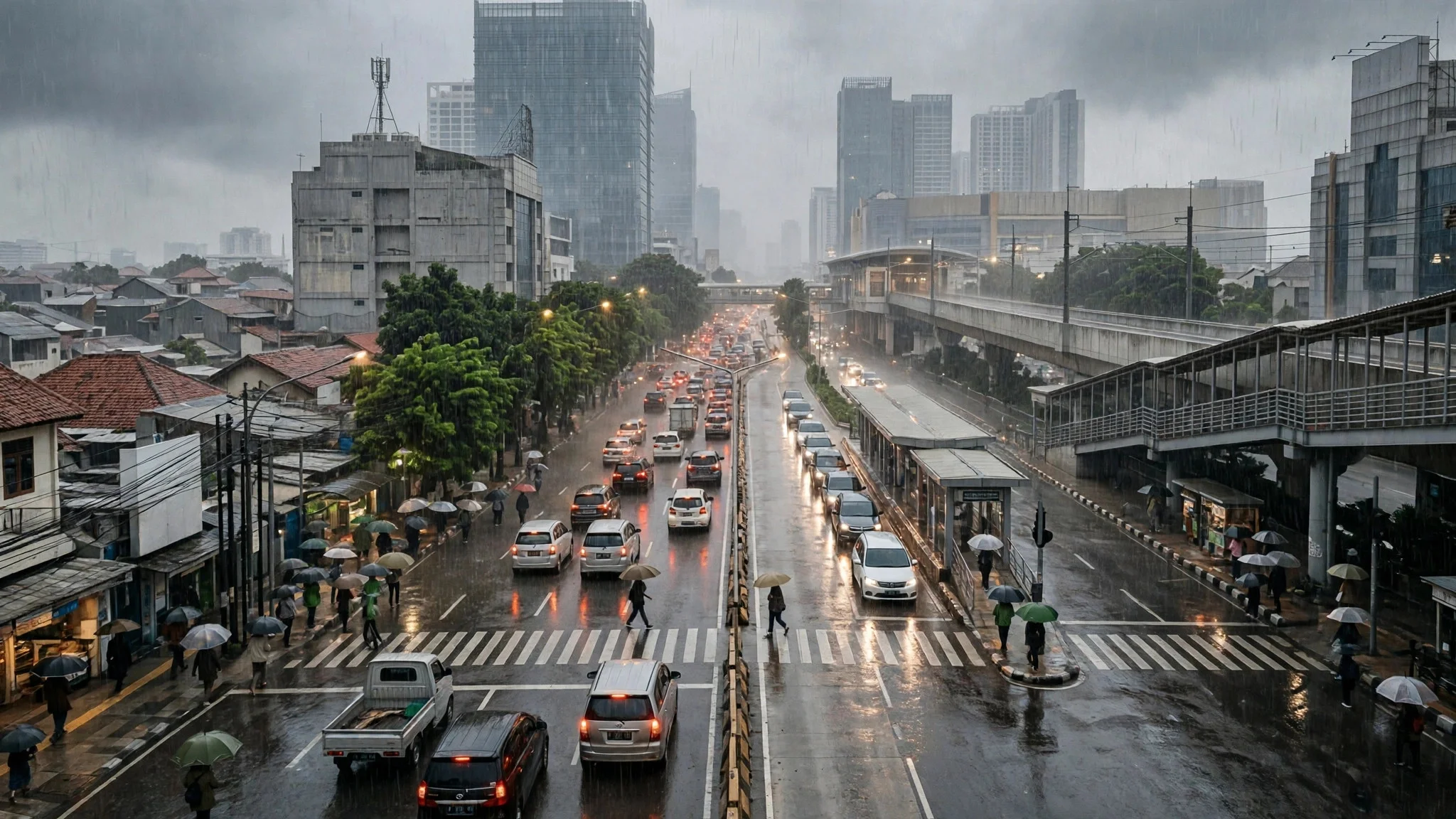
Jakarta's rainy season runs roughly from November to March, with the heaviest rain usually falling in December, January, and February. Rain here rarely lasts all day: it often arrives as a short, heavy afternoon downpour, then clears, leaving the air cooler and the streets wet for an hour or two.
This guide explains what the rainy season changes for visitors, from brief local flooding and slower traffic to what you should pack and how to plan your days. With a little preparation, the wet months are still a good time to visit, and hotel prices are often lower than in the dry season.
When Is the Rainy Season in Jakarta
The wet season usually starts in November, builds through December, and peaks in January and February, when Jakarta can see rain on most days. March still brings showers, but they become less frequent, and by April the dry season is on its way.
Most rain falls in the afternoon or early evening, often between 3 and 7 pm, and a typical shower lasts 30 minutes to two hours. Mornings are usually drier, which is why many travellers plan outdoor sightseeing early and keep indoor activities for the afternoon.

What Changes: Flooding, Traffic, and Delays
Heavy rain can cause brief local flooding on low streets, and some underpasses and side roads become hard to pass for an hour or so until the water drains. Main roads, malls, and hotels usually stay open, and the city clears most flooded spots quickly after the rain stops.
Traffic moves more slowly in the rain, and ride-hailing prices often rise when demand surges, so allow at least 30 to 60 minutes extra for any journey. Flights can also be delayed in very heavy storms, so check your flight status before leaving for the airport.
What to Pack for the Rain
A light, packable rain jacket is the single most useful item, because it keeps you dry without taking much space in your day bag. A small folding umbrella helps too, and you can buy cheap umbrellas at convenience stores and street stalls all over the city.
Pack a waterproof pouch or dry bag for your phone, passport, and camera, and bring shoes that can get wet, plus a spare pair of socks. A light change of clothes in your day bag is worth it if you plan to walk far, since even a short shower can soak you through.
Planning Your Days Around the Rain
Plan outdoor sights, markets, and walking tours for the morning, when the sky is usually at its clearest, and save museums, malls, cafes, and spa visits for the rainy afternoon. Check the weather forecast each morning, but treat it as a rough guide rather than a promise.
Keep your schedule flexible: if a downpour starts, step into a cafe or a mall for an hour instead of fighting through it. Many of Jakarta's best food and shopping experiences are indoors anyway, so a rainy afternoon rarely wastes a day.

Practical Tips: Transport, Safety, and Rental Gear
Your passport must be valid for at least six months when you enter Indonesia, and carry a copy on your phone: hotels and rental providers often ask for it. Use the MRT and TransJakarta where possible during heavy rain, since trains keep running when the roads slow down.
Avoid wading through flood water, because it can hide open drains and debris, and keep valuables in a waterproof bag. If you want to photograph the city in the rain, rental providers in Jakarta deliver cameras to hotels, usually ask for a passport, and charge a daily rate.

Checklist Before You Book
Before you confirm a booking, double-check the number of units, the specifications, the rental period, and any delivery or collection fees. Make sure the written quote states what happens if a unit fails and how quickly a replacement arrives, so no surprise charge appears later and disrupts your budget.
Keep a copy of the quote, the handover note, and photos of the initial condition in one project folder. This record makes it easier for your finance team to check the invoice, speeds up any damage discussion, and gives you a tidy reference when you rent again for your next project.
Finally, name one person responsible for the whole rental period: the person who receives the units, checks their condition, and contacts the provider if anything goes wrong. One clear owner prevents confusion when teams change shifts, and ensures every unit returns in a properly recorded condition.
Ready to rent? Visit desasewaindonesia.com






