Ramadan changes the rhythm of Jakarta, and visiting during the holy month gives Muslim travellers a warm and memorable experience. Days are quieter, evenings come alive with food stalls and family gatherings, and the city's grand mosques fill with worshippers for evening prayers and the breaking of the fast.
This guide explains how Ramadan works in Jakarta, where to break your fast, which mosques to visit, and how to respect local customs. It also covers practical details such as prayer times, transport at iftar, and costs in IDR and USD, so you can plan a smooth and respectful trip.
When Ramadan Falls and What Changes in Jakarta
Ramadan follows the Islamic lunar calendar, so the dates move about ten days earlier each year, and the exact start is confirmed by the sighting of the moon. Fasting lasts around 13 hours in Jakarta, from dawn at about 4:30 a.m. until sunset at about 6 p.m., and the dates are announced in the news.
Government offices and many companies shorten their working hours during Ramadan, and schools often finish earlier in the afternoon. Malls and restaurants stay open late, many until midnight, so evenings are the busiest and liveliest time to shop, eat, and explore the city.

Iftar: Where and What to Eat
Breaking the fast, known as iftar or buka puasa, usually starts with dates and sweet tea, followed by a full meal. Hotels and restaurants across Jakarta offer iftar buffets with Indonesian dishes, from satay and rendang to fresh fruit and traditional sweets, usually from around IDR 250,000 to IDR 600,000 per person (roughly USD 15 to USD 36).
Street food stalls appear near mosques and markets before sunset, selling fried snacks, sweet porridge, and cold drinks for around IDR 10,000 to IDR 50,000 (roughly USD 0.60 to USD 3). Arrive early, since popular stalls sell out fast, and carry cash, because many small stalls do not accept cards.
Mosques to Visit: Istiqlal and Beyond
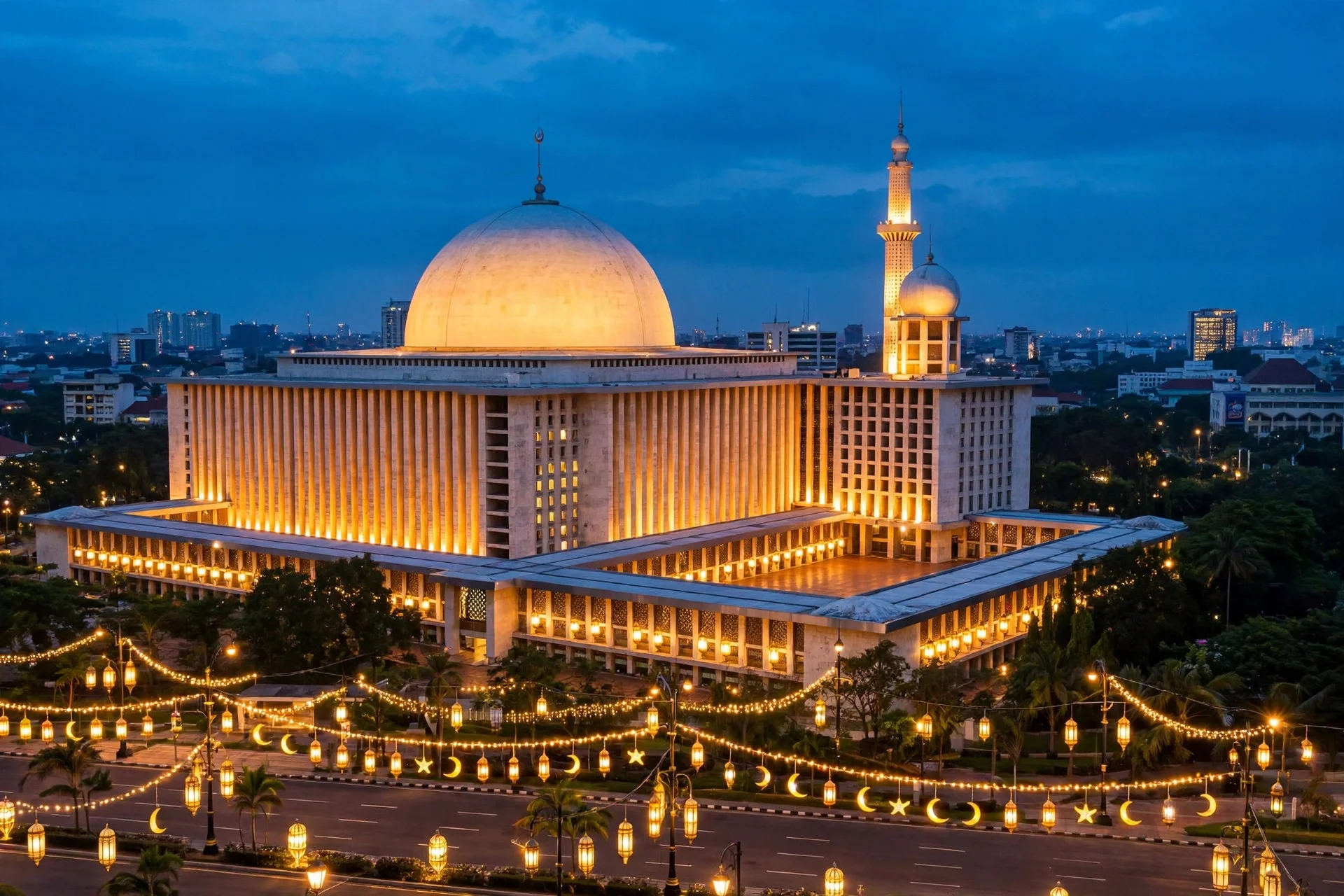
Istiqlal Mosque in Central Jakarta is the largest mosque in Southeast Asia and the heart of Ramadan in the city, with room for tens of thousands of worshippers. Visitors are welcome outside prayer times, and the mosque offers free guided tours in English that explain its architecture, history, and role in Indonesian life.
Dress modestly when you visit any mosque, with shoulders and knees covered, and women should bring a headscarf or use one provided at the entrance. Remove your shoes before entering the prayer hall, speak quietly, and ask before taking photos of people, since many worshippers prefer not to be photographed during prayer.
Etiquette for Muslim and Non-Muslim Visitors
During Ramadan, eating, drinking, and smoking in public during daylight hours is best avoided out of respect for those who are fasting, even though restaurants still serve non-fasting guests indoors. Greet people with 'Selamat berpuasa' during the month, and 'Selamat Hari Raya' or 'Minal aidin wal faizin' when Eid arrives.
Dress modestly in public, especially near mosques and in residential areas, and keep swimwear for hotel pools and private beaches. If you are invited to an iftar meal, arrive on time, accept the dates and tea offered first, and thank your host warmly, since sharing the fast-breaking meal is a valued tradition.

Practical Tips: Transport, Staying Connected, and Costs
Traffic peaks just before iftar, as everyone rushes home to break the fast, so allow extra time and book ride-hailing cars early in the late afternoon. After iftar the roads clear for a while, then fill again as people head out for evening prayers, night markets, and late shopping.
Bring a phone and a laptop so you can check prayer times, find iftar venues, and stay in touch with family during the month. If you need a spare device, consider renting a laptop or smartphone in Jakarta, since rental providers deliver to hotels, usually ask for a passport, and charge a daily rate that depends on the model.

Checklist Before You Book
Before you confirm a booking, double-check the number of units, the specifications, the rental period, and any delivery or collection fees. Make sure the written quote states what happens if a unit fails and how quickly a replacement arrives, so no surprise charge appears later and disrupts your budget.
Keep a copy of the quote, the handover note, and photos of the initial condition in one project folder. This record makes it easier for your finance team to check the invoice, speeds up any damage discussion, and gives you a tidy reference when you rent again for your next project.
Finally, name one person responsible for the whole rental period: the person who receives the units, checks their condition, and contacts the provider if anything goes wrong. One clear owner prevents confusion when teams change shifts, and ensures every unit returns in a properly recorded condition.
Ready to rent? Visit desasewaindonesia.com