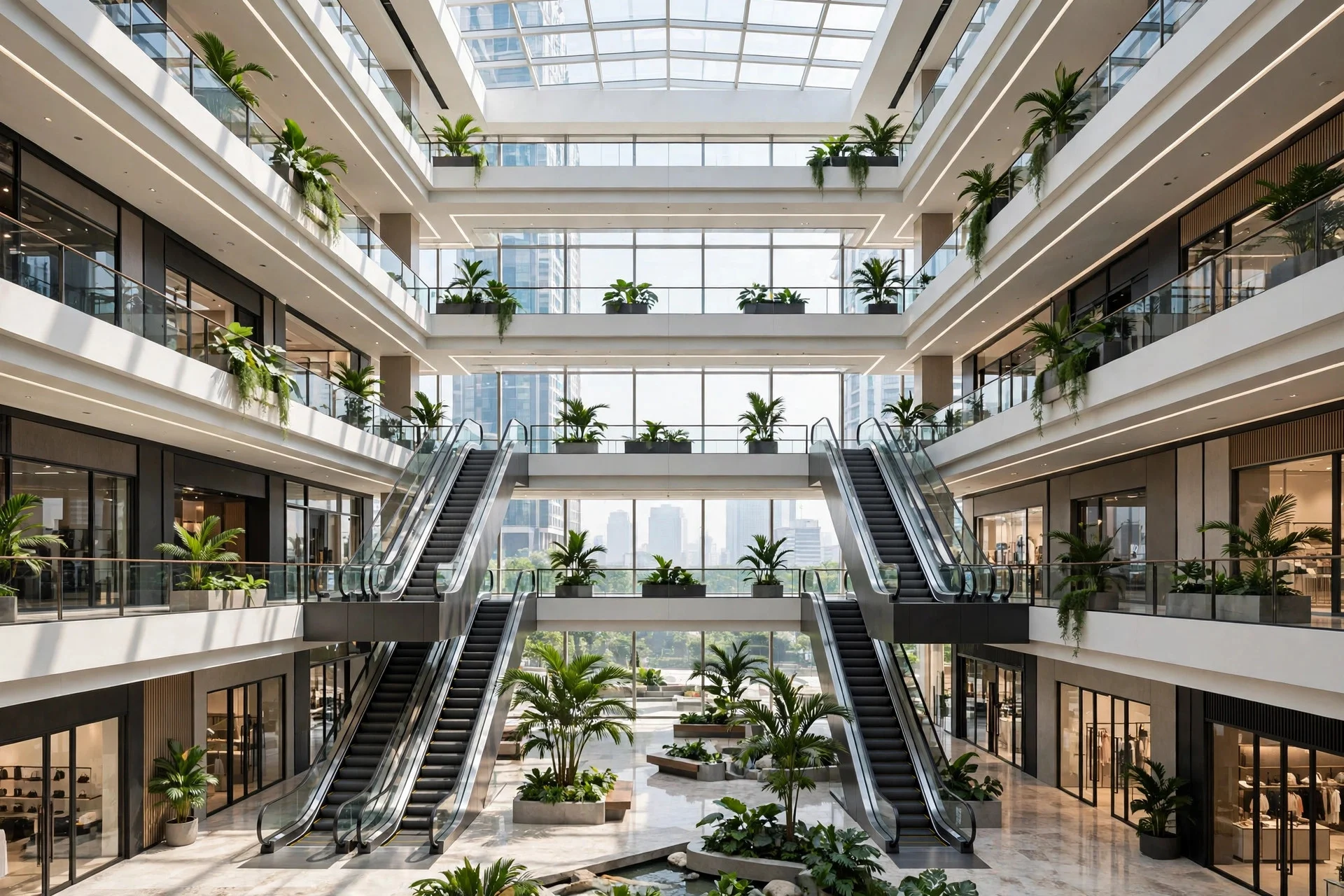
Jakarta is one of the best shopping cities in Southeast Asia, with more than a hundred malls ranging from luxury towers in the centre to huge family malls in the suburbs. Air-conditioned malls are also a welcome escape from the tropical heat, and many of them stay open until 10 at night.
This guide covers the best malls for tourists, the brands to look for, bargain tips, and how to get there by MRT and ride-hailing. Prices are in IDR with approximate USD equivalents, plus practical advice on payment, tax refunds, and what to buy that you cannot easily find at home.
The Big Malls: Grand Indonesia, Plaza Indonesia, and More
Start in Central Jakarta, where Grand Indonesia and Plaza Indonesia sit side by side on Jalan M.H. Thamrin. Grand Indonesia is the largest of the two, with hundreds of shops across eight floors, while Plaza Indonesia is smaller and more focused on luxury brands, with a quieter and more relaxed feel.
For a different experience, try Pondok Indah Mall in South Jakarta, which is popular with local families and has a good mix of mid-range brands, cinemas, and restaurants. Senayan City and Plaza Senayan, near the sports complex, are good for fashion and electronics, and both are easy to reach by MRT or ride-hailing.

What to Buy: Brands, Local Labels, and Bargains
International brands cost about the same as in Singapore or Kuala Lumpur, so the real bargains are local. Look for Indonesian labels in fashion, batik shirts, and handmade leather goods, which cost from around IDR 200,000 to IDR 800,000 (roughly USD 12 to USD 48) for good quality.
Electronics and gadgets are widely available, but check the warranty before you buy, since some warranties only apply inside Indonesia. Local snacks, coffee beans, and tea make good gifts, and cost from around IDR 50,000 to IDR 200,000 (roughly USD 3 to USD 12) per pack in mall supermarkets.
Prices and Payment: Cash, Cards, and Tax Refunds
Most mall shops accept international credit and debit cards, and many also accept mobile payments, so you rarely need large amounts of cash. Prices already include tax, and some shops offer a discount if you pay with a local bank card, so it is worth asking before you pay.
Foreign tourists can claim a VAT refund on purchases above a minimum amount, usually from around IDR 500,000 (roughly USD 30) at a single shop in one day. Ask the shop for a tax refund form, keep the receipt, and show the goods at the airport refund counter before you check in for your flight home.

How to Get There and Around
The MRT is the easiest way to reach the central malls, with stations at Bundaran HI for Grand Indonesia and Plaza Indonesia, and at Senayan for Senayan City. A single MRT trip costs from around IDR 3,000 to IDR 14,000 (roughly USD 0.20 to USD 0.85), and trains run from around 5 in the morning until 11 at night.
Ride-hailing apps are the best option for malls without an MRT station, such as Pondok Indah Mall. A trip across town costs from around IDR 50,000 to IDR 100,000 (roughly USD 3 to USD 6), and the app shows the fare before you confirm. Avoid the late-afternoon rush, when traffic around the big malls slows to a crawl.
Eating, Resting, and Family Facilities in Malls
Every big mall has a food court on a lower or top floor, with local dishes from around IDR 30,000 to IDR 80,000 (roughly USD 1.80 to USD 4.80) and international chains at similar prices. Food courts are a good place to try Indonesian food in air-conditioned comfort, with clear menus and fixed prices.
Malls also have clean restrooms, prayer rooms, nursing rooms, and seating areas on every floor, which makes them easy for families with children. If you need a break, most malls have coffee shops with free Wi-Fi, where you can rest, charge your phone, and plan the next stop on your trip.

Checklist Before You Book
Before you confirm a booking, double-check the number of units, the specifications, the rental period, and any delivery or collection fees. Make sure the written quote states what happens if a unit fails and how quickly a replacement arrives, so no surprise charge appears later and disrupts your budget.
Keep a copy of the quote, the handover note, and photos of the initial condition in one project folder. This record makes it easier for your finance team to check the invoice, speeds up any damage discussion, and gives you a tidy reference when you rent again for your next project.
Finally, name one person responsible for the whole rental period: the person who receives the units, checks their condition, and contacts the provider if anything goes wrong. One clear owner prevents confusion when teams change shifts, and ensures every unit returns in a properly recorded condition.
Ready to rent? Visit desasewaindonesia.com