
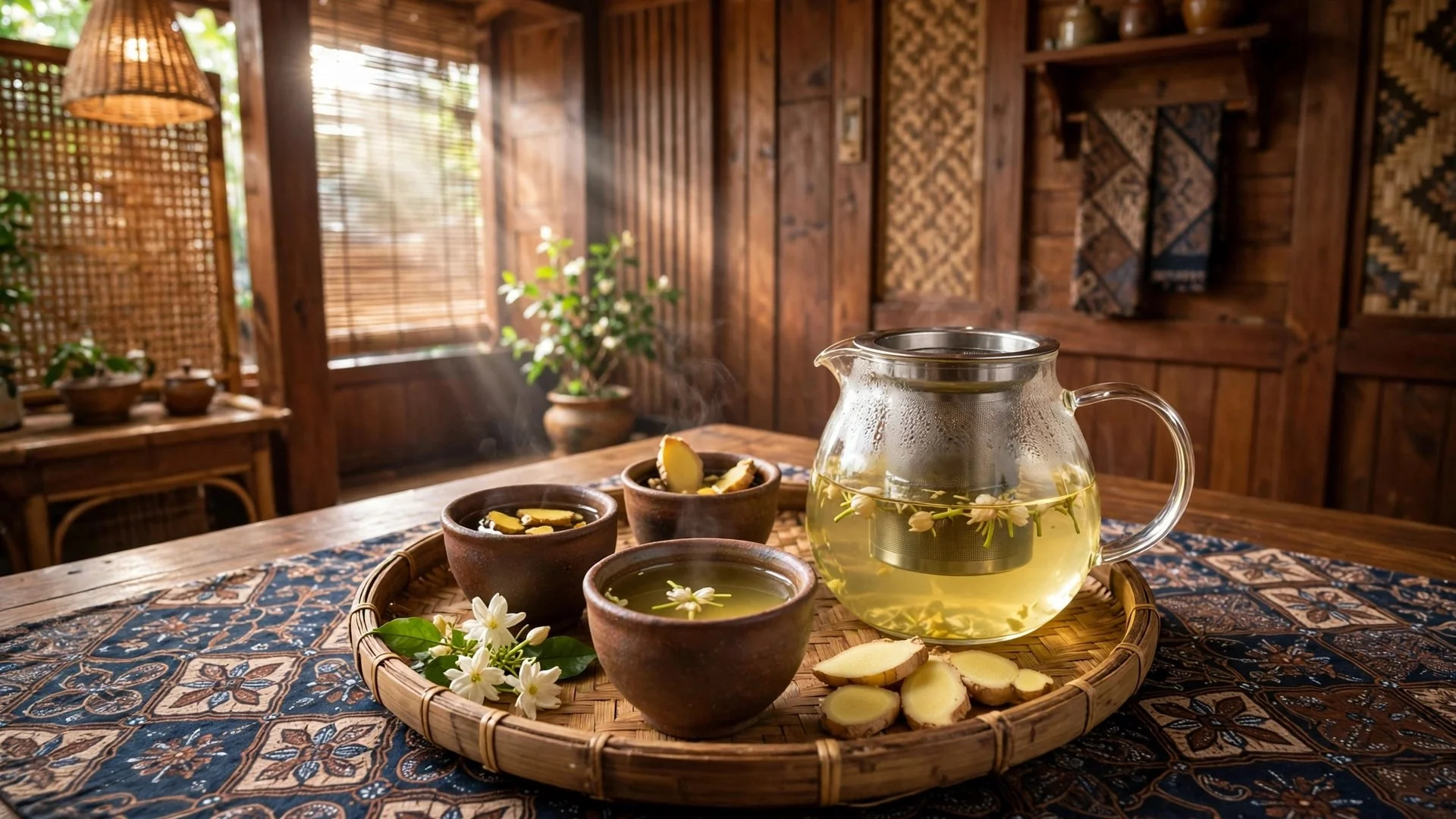
Tea and spiced drinks are woven into daily life in Jakarta. A glass of hot ginger tea starts the morning, iced tea cools the afternoon, and a small cup of herbal jamu is a traditional pick-me-up. For visitors, tasting these drinks is a cheap, easy way to understand Indonesian food culture.
This guide covers the traditional drinks to try, the tea houses and small stalls that serve them, typical prices in rupiah and dollars, and the etiquette that helps you order like a local. Prices are given as ranges, since they vary between street stalls and cafes.
Wedang Jahe and Hot Spiced Drinks
Wedang jahe is hot ginger tea, usually made with fresh ginger, palm sugar, and sometimes lemongrass or cloves. It is warming and mildly sweet, and Indonesians often drink it in the evening or when it rains. A glass from a street seller costs around IDR 5,000 to IDR 15,000 (roughly USD 0.30 to USD 1).
Similar hot drinks include wedang ronde, a ginger soup with glutinous-rice balls, and bandrek, a spiced drink from West Java with ginger, cinnamon, and coconut milk. Look for sellers with pushcarts in the evening, especially near night markets and busy streets, and enjoy the drink while it is still hot.

Es Teh, Es Jeruk, and Everyday Iced Drinks
Iced tea (es teh) is the default drink of Jakarta: black tea served over ice, usually sweetened. It costs IDR 5,000 to IDR 15,000 (roughly USD 0.30 to USD 1) at a food stall, more in a restaurant. Es jeruk is fresh lime or orange juice over ice, a good choice if you want something unsweetened.
Order "es teh tawar" for plain iced tea with no sugar, or "teh hangat" for hot tea. Bottled water is sold everywhere, and iced drinks from busy stalls that use factory-made ice are generally the safest choice. Most food stalls will happily refill your glass if you ask.
Jamu: Indonesia's Herbal Tonics
Jamu is a traditional herbal drink made from roots, leaves, and spices such as turmeric, ginger, and tamarind. The best-known types are kunyit asam (turmeric and tamarind, slightly sour and refreshing) and beras kencur (rice and aromatic ginger, sweet and creamy).
Traditionally, jamu sellers carry bottles in a basket on their back and walk through neighbourhoods, though today you will also find jamu cafes and bottled versions in supermarkets. A small bottle costs around IDR 10,000 to IDR 25,000 (roughly USD 0.60 to USD 1.50). Try a small glass first — the flavours are strong and unusual. If you take medication or are pregnant, ask a doctor before drinking herbal tonics.

Tea Houses and Quiet Corners for a Slow Afternoon
Jakarta has a growing number of tea houses and quiet cafes where you can sit with a pot of jasmine or oolong tea and watch the city slow down. Look for them in Kemang, Menteng, and the older streets around Kota Tua, where colonial-era shop houses have been turned into tea rooms.
A pot of tea for two usually costs IDR 50,000 to IDR 120,000 (roughly USD 3 to USD 7). These are good places to rest between sightseeing stops, plan the next part of your day, or simply enjoy a calm hour away from traffic. Many tea houses also sell loose-leaf tea to take home, which makes a light and practical souvenir.
Prices, Etiquette, and Practical Tips for Visitors
Most traditional drinks are very affordable: street drinks from around IDR 5,000 (roughly USD 0.30), tea house pots up to around IDR 120,000 (roughly USD 7). Hold a hot glass by its handle or use the small plate underneath, and stir your drink before the first sip — palm sugar often settles at the bottom.
Tipping is not expected at street stalls, and in cafes a small tip is a kind gesture rather than a requirement. Keep a photocopy of your passport on your phone and the original in your hotel safe, and carry small cash notes for street sellers. If you are planning a relaxed afternoon of tea tasting with friends, a portable audio speaker or a projector for sharing photos can be rented and delivered to your hotel.
Ready to rent? Visit desasewaindonesia.com






