
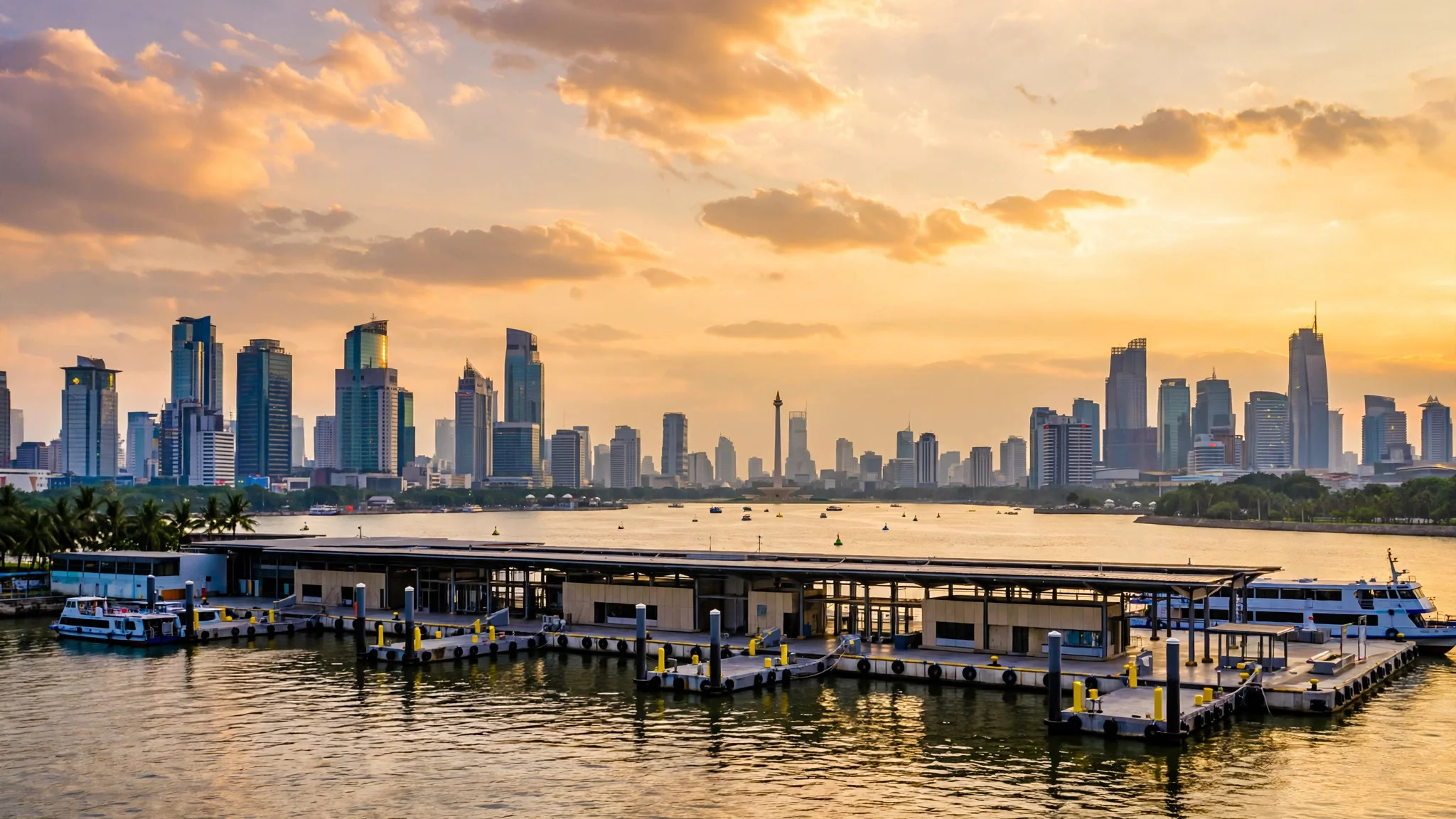
Jakarta is one of the easiest weekend escapes from Singapore: the flight takes about one and a half hours, and the city offers a very different pace — huge malls, street food, old-town history, and cafes that stay open late.
This guide covers the practical side of a first trip from Singapore: flights, ferry options, a simple two-day plan, where to stay, and how to get around. Prices are in IDR and SGD where helpful, with approximate USD equivalents.
Getting There: Flights from Singapore to Jakarta
Several airlines fly direct from Singapore Changi to Jakarta Soekarno-Hatta (CGK) every day, with a flight time of about 90 minutes. Budget carriers often sell return tickets from around SGD 100 to SGD 200 (roughly USD 75 to USD 150) when booked a few weeks ahead, while full-service airlines cost more.
Most flights land at Terminal 3, and the ride into central Jakarta takes 45 to 90 minutes. The airport train to BNI City station costs around IDR 70,000 (roughly USD 4.20) and takes about 45 minutes, while a taxi or ride-hailing car costs from around IDR 200,000 to IDR 350,000 (roughly USD 12 to USD 21).

Ferries and Overland Options: Is There a Boat?
There is no direct passenger ferry from Singapore to Jakarta: the sea route is long and slow, and no operator runs it. The closest ferry option is the Singapore to Batam crossing, which takes about an hour, but from Batam you still face a domestic flight or a long overland trip to Jakarta.
For almost every visitor, flying is the only sensible option, and the cheapest once you count the extra travel. If you enjoy slow travel, combine a Batam ferry weekend with a separate Jakarta flight on another trip instead of trying to link the two.
Weekend Itinerary: Two Days in Jakarta
Spend your first morning in Kota Tua, the old town, walking the canal streets and visiting the small museums, then have lunch in Glodok, the old Chinatown, where noodle stalls and bakeries have served the same recipes for decades. In the afternoon, visit the National Monument area and finish the day with dinner and coffee in Kemang.
On day two, start with a morning market such as Pasar Santa, then spend the afternoon in a big mall like Grand Indonesia or Plaza Indonesia. If you want a break from the city, a half-day trip to the Thousand Islands by boat from Marina Ancol offers beaches and snorkelling from around IDR 500,000 (roughly USD 30) per person.
Where to Stay and How to Get Around
First-time visitors usually stay in Central or South Jakarta, near the MRT line, where hotels range from around IDR 500,000 a night (roughly USD 30) for a comfortable three-star hotel to IDR 1,500,000 and above (roughly USD 90) for a five-star stay. Book near an MRT station to move around without traffic.
Ride-hailing apps are the easiest way to travel, with short trips costing from around IDR 15,000 to IDR 40,000 (roughly USD 1 to USD 2.50). The MRT and TransJakarta bus cover the main corridors and are cheap, while the commuter train connects the city with Bogor and other nearby towns for a day trip.

Practical Tips: Passport, Visa, Money, and Packing
Singapore citizens can enter Indonesia visa-free for up to 30 days, but your passport must be valid for at least six months on arrival, and carry a copy while exploring. If you plan to stay longer than 30 days, buy a visa on arrival at the airport for around IDR 500,000 (roughly USD 30), which can be extended once.
The local currency is the rupiah, and cash is still king at markets and street stalls, so withdraw some at an airport ATM or exchange a little at Changi before you fly. Pack light clothes, a rain jacket, and comfortable shoes: Jakarta is hot and humid all year, with short afternoon showers. If you want to photograph the trip, rental providers in Jakarta deliver cameras to hotels, usually ask for a passport, and charge a daily rate.

Checklist Before You Book
Before you confirm a booking, double-check the number of units, the specifications, the rental period, and any delivery or collection fees. Make sure the written quote states what happens if a unit fails and how quickly a replacement arrives, so no surprise charge appears later and disrupts your budget.
Keep a copy of the quote, the handover note, and photos of the initial condition in one project folder. This record makes it easier for your finance team to check the invoice, speeds up any damage discussion, and gives you a tidy reference when you rent again for your next project.
Finally, name one person responsible for the whole rental period: the person who receives the units, checks their condition, and contacts the provider if anything goes wrong. One clear owner prevents confusion when teams change shifts, and ensures every unit returns in a properly recorded condition.
Ready to rent? Visit desasewaindonesia.com






