
Introduction
Jakarta is an easy first step into Southeast Asia for travellers from South Korea. The flight from Seoul is under seven hours, the visa is issued on arrival, and the city offers a mix that will feel both new and comfortable: huge malls, a historic old town, rooftop cafes, and a growing Korean community with its own restaurants and shops. This guide covers flights, visas, transport, Korean food, and the best weekend trips, so you can make the most of a first visit.
Flights from Seoul to Jakarta
Korean Air and Garuda Indonesia fly non-stop from Seoul Incheon (ICN) to Jakarta (CGK) in about 6 hours and 30 minutes, and other airlines offer one-stop routes through Singapore or Kuala Lumpur in 8 to 11 hours. Return economy fares commonly range from IDR 6,000,000 to IDR 12,000,000 (around USD 370–740), with the non-stop flights usually at the higher end.
All international flights arrive at Soekarno-Hatta International Airport (CGK), about 25 km west of central Jakarta. The airport rail link reaches the city centre in roughly 45 minutes, while a taxi or ride-hailing car takes 45 minutes to two hours depending on traffic. Try to land in the afternoon when you can, and arrange a hotel pickup if you arrive late at night — it is the simplest start after a long flight.
Visa on Arrival for South Korean Passport Holders
South Korean passport holders can get a visa on arrival at Soekarno-Hatta Airport. The visa costs IDR 500,000 (around USD 31) and is valid for 30 days, with a possible one-time extension of 30 days at an immigration office. Payment is by card at the visa counter, so keep a working international debit or credit card ready.
Your passport must be valid for at least six months beyond your arrival date, and you should carry a return or onward ticket plus proof of your hotel booking. Officers sometimes ask to see these, so keep a printed or phone copy handy. If you plan to stay longer than 30 days, apply for a visit visa before you travel rather than relying on the visa on arrival.
Getting Around Jakarta
Jakarta's MRT, LRT, TransJakarta bus lanes, and commuter trains cover the main business, shopping, and historic districts, and a single ride costs roughly IDR 3,000–14,000 (around USD 0.20–0.90). Ride-hailing cars and motorbike taxis are cheap and easy to book by app, and they are the simplest option for short trips and late evenings. The system will feel familiar if you have used Seoul's transport apps — the main difference is that Jakarta traffic is heavier and less predictable.
Allow extra time for every journey in the morning and evening rush hours, roughly 7:00–10:00 and 17:00–20:00. If you have a meeting or a flight to catch, leave at least an hour earlier than the map suggests. Central areas such as Sudirman, Thamrin, and Kota Tua are walkable, but pavements can be uneven, so comfortable shoes are a must.
Where to Stay
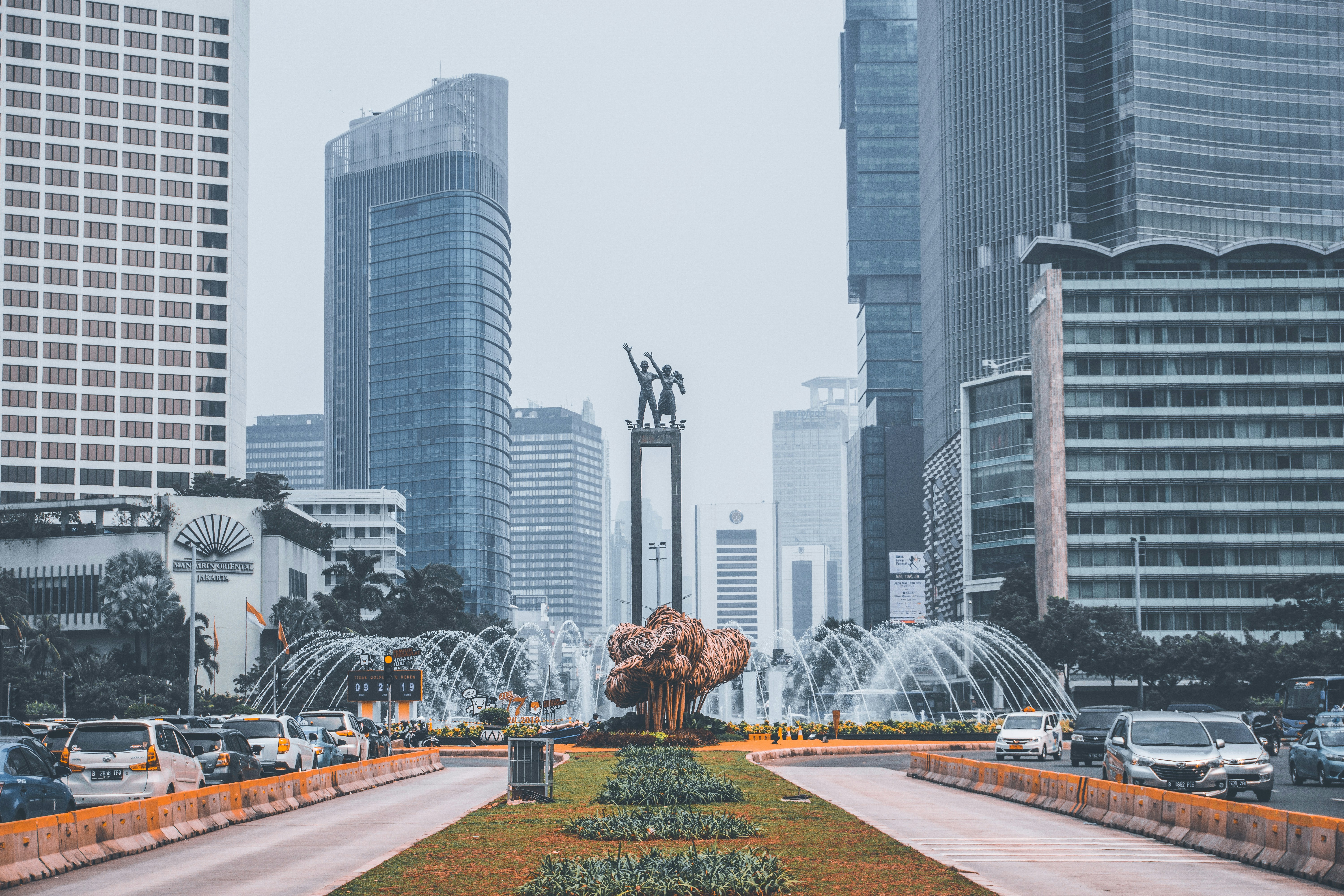
Most first-time visitors stay in Central or South Jakarta near an MRT station. Central Jakarta puts you close to Monas, the National Museum, and the old town, while South Jakarta offers malls, cafes, and the liveliest evening scene. Budget hotels and guesthouses start from around IDR 300,000 per night (around USD 18), mid-range hotels from IDR 700,000 (around USD 43), and international five-star hotels from IDR 1,500,000 (around USD 92).
If you are combining work and travel, check that your hotel has stable Wi-Fi, or rent a pocket WiFi device or a laptop for the stay — rental providers in Jakarta can deliver directly to your hotel, so your equipment is ready when you arrive. Many hotels in the Sudirman and Kuningan business districts are used to Korean business guests and offer the kind of service you would expect at home.
Korean Food Spots in Jakarta
Jakarta has a well-established Korean community, and Korean restaurants are easy to find in areas such as Senayan, Kemang, Kelapa Gading, and the malls of Central Jakarta. You will find Korean barbecue, bibimbap, kimchi jjigae, tteokbokki, and fried chicken, with a typical meal costing around IDR 100,000–250,000 per person (around USD 6–15). Several Korean supermarkets stock kimchi, gochujang, and instant noodles, which is handy for a longer stay.
For local food, try nasi goreng (fried rice), soto Betawi (Jakarta beef soup), and sate ayam (chicken skewers). Indonesian food is generally sweeter and spicier than Korean food, and most restaurants are halal, so pork dishes are less common outside Korean and Chinese restaurants. If you miss the taste of home, the Korean restaurants of Senayan City and Plaza Senayan are a reliable first stop.
Weekend Trips from Jakarta
If you have a free weekend, the Bogor Botanical Gardens are about an hour south of the city and offer giant rain trees, a palace, and cool mountain air — a calm escape from Jakarta traffic. Entry costs around IDR 15,000–25,000 (around USD 1–1.50).
For the sea, take a fast boat from Marina Ancol to the Thousand Islands (Kepulauan Seribu). The nearest islands have clear water, snorkelling, and simple beach resorts, with return boat tickets from around IDR 200,000 (around USD 12). Book a day ahead in peak season and go early to make the most of the daylight.
Bandung is the classic weekend escape: a cool highland city about three hours away by train or toll road, known for tea gardens, the Tangkuban Perahu volcano crater, factory outlets, and Sundanese food. Stay one night if you can, so the Sunday return traffic does not eat your whole day.

Practical Tips for South Korean Travellers
Carry some Indonesian rupiah in cash for street food, markets, and small transport, although cards and QR payments work in most malls and restaurants. A local SIM card or eSIM at the airport costs from around IDR 100,000 (around USD 6) and gives you data for maps and ride-hailing apps straight away. Most Korean cards work at Indonesian ATMs, but let your bank know you are travelling first.
Your passport is the only ID you will need for hotel check-in and for renting gear: foreign nationals can usually book a rental with a passport alone, no local ID required. If you need a laptop for remote work, a camera for the trip, or a pocket WiFi device, Jakarta rental services can deliver to your hotel or to the airport, saving you luggage space on the flight from Seoul. Drink bottled water, use sunscreen in the tropical sun, and keep your travel insurance details on your phone.
Ready to rent? Visit desasewaindonesia.com






